


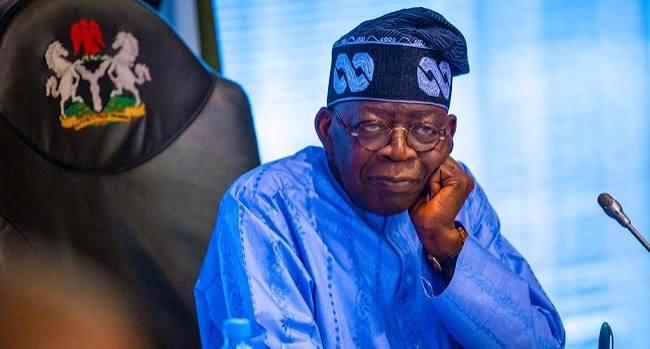
As APC revisits its 2023 campaign pledge, questions remain over power supply, estimated billing, metering and the everyday realities of electricity consumers
– By Fresh Facts Magazine – Special Political and Economic Feature –
As political activities gradually gather momentum ahead of Nigeria’s 2027 general elections, the electricity question is emerging once again as a potentially decisive issue in the assessment of President Bola Ahmed Tinubu’s administration.
The All Progressives Congress (APC) Presidential Campaign Council’s November 1, 2026 statement, signed by its spokesperson, Dele Alake, defending the President’s 2023 electricity campaign promise, is therefore more than an attempt to correct what the party considers an incomplete quotation. It is also an early effort to establish a political narrative around the administration’s performance in one of Nigeria’s most persistent economic and infrastructural challenges.
At the heart of the controversy is Tinubu’s declaration during an engagement with members of the Organised Private Sector in Lagos ahead of the 2023 elections.
“Whichever way, by all means necessary, you will have electricity, and you will not pay for estimated bills anymore. A promise made will be a promise kept.”
He subsequently added that if he failed to fulfil the promise and sought a second term, Nigerians should not vote for him unless he provided adequate reasons for his inability to deliver.
Three years later, the APC campaign council is reminding Nigerians that the President’s statement should be considered in its entirety, particularly the concluding qualification.
But does the additional qualification significantly change the political meaning of the original promise? And, more importantly, have the reforms and interventions undertaken since May 2023 delivered enough results to convince Nigerians that the President deserves another opportunity?
These questions deserve a careful examination beyond partisan arguments.
THE POLITICS OF THE QUALIFICATION: AN EXPLANATION IS NOT THE SAME AS DELIVERY
One of the most significant aspects of the APC statement is its insistence that the President’s promise has been reproduced without its concluding qualification.
The argument is that Tinubu did not make an unconditional commitment to deliver every aspect of his electricity agenda within a particular timeframe without considering the institutional and financial difficulties confronting the sector.
There is some merit in the council’s insistence that the complete statement should be quoted. Responsible political reporting requires that public statements be presented in their proper context.
However, the qualification does not cancel the original commitment. Rather, it establishes an expectation that the President must account for any failure to fulfil it.
The distinction is important.
Tinubu did not simply promise to introduce policies or initiate reforms. His declaration addressed two direct concerns of ordinary Nigerians: access to reliable electricity and the elimination of estimated billing.
These are outcomes that consumers can personally evaluate.
For millions of households, electricity is not an abstract policy discussion. It determines the cost of running businesses, preserving food, operating household appliances, educating children and maintaining a reasonable standard of living.
For manufacturers and small businesses, unreliable electricity translates into higher operating costs, dependence on diesel and petrol generators, reduced competitiveness and, in some cases, business closures.
Consequently, an adequate explanation for non-delivery may satisfy the President’s stated obligation to account for his performance, but it cannot automatically substitute for the delivery Nigerians were promised.
The political question is therefore not whether Tinubu has reasons for the difficulties encountered. It is whether those reasons, supported by demonstrable achievements, will persuade voters that another four years are justified.
ELECTRICITY ACT 2023: A SIGNIFICANT REFORM WITH LONG-TERM POTENTIAL
One of the strongest points in the APC campaign council’s defence is the Electricity Act 2023, which Tinubu signed into law on June 9, 2023.
The legislation introduced an important structural change by empowering state governments to establish and regulate electricity markets within their respective jurisdictions, subject to the constitutional and statutory framework.
Previously, electricity regulation was heavily centralised. The new framework creates opportunities for states to develop local electricity markets, attract independent investors, establish regulatory institutions and explore alternative electricity generation and distribution arrangements.
This is a significant development because Nigeria’s electricity crisis cannot be resolved through federal government intervention alone.
The country’s geographical size, growing population and varying economic requirements make a more decentralised approach potentially beneficial.
According to the Nigerian Electricity Regulatory Commission (NERC), 15 states had completed the transition to regulating their own electricity markets by May 2026. The second-quarter 2026 regulatory report subsequently documented the transfer of oversight to 16 states.
This represents tangible progress in implementing the reform.
Nevertheless, the existence of state electricity regulatory commissions does not automatically translate into improved electricity supply. States must demonstrate the capacity to attract investments, develop infrastructure, enforce standards and protect consumers.
There is also a need to distinguish between state-level electricity activities and the national transmission network, which remains subject to federal regulation.
The Electricity Act is therefore an important foundation, but its ultimate success will be measured by the number of households and businesses receiving better electricity services through the new arrangements.
METERING: PROGRESS, BUT THE PROMISE REMAINS UNFINISHED
Estimated billing was one of the specific issues Tinubu addressed during his 2023 campaign engagement.
The APC statement identifies the Presidential Metering Initiative as a major intervention aimed at addressing Nigeria’s longstanding metering deficit.
The initiative, approved in November 2023, targets the deployment of five million smart meters by 2027.
There is evidence of progress. However, independent regulatory figures also reveal the magnitude of the remaining challenge.
NERC’s Second Quarter 2026 report states that as of June 30, 2026, Nigeria had 12,589,486 active registered electricity customers, out of which 7,743,839 had been metered.
This represents a national metering rate of 61.51 per cent, leaving approximately 38.49 per cent of active registered customers without meters.
The Commission also recorded the installation of 350,270 meters during the second quarter of 2026.
These figures show that metering interventions are producing results, but they equally demonstrate that millions of electricity consumers remain exposed to the challenges associated with unmetered electricity consumption.
More importantly, the APC’s reference to more than 1.5 million customers metered under the Presidential Metering Initiative should be supported with a transparent breakdown distinguishing meters delivered under that initiative from those installed through other government and distribution-company programmes.
This distinction matters because Nigeria has operated different metering programmes over several years. Not every meter installed since 2023 can automatically be credited to the Presidential Metering Initiative.
For the administration, the challenge is to accelerate meter deployment, eliminate arbitrary billing practices and ensure that consumers are not made to pay for electricity they did not consume.
Until that happens, estimated billing will remain an important political vulnerability for the APC.
THE POWER SECTOR DEBT: A FINANCIAL INTERVENTION WITH MIXED IMPLICATIONS
Another major pillar of the administration’s electricity reform agenda is the proposed settlement of verified legacy debts owed to electricity generation companies and gas suppliers.
The APC campaign council describes this intervention as a N4 trillion bond programme designed to restore liquidity and encourage investment across the electricity value chain.
The initiative addresses a genuine problem.
For years, inadequate payments, accumulated debts and weak commercial arrangements have undermined the ability of electricity generation companies to maintain facilities, secure gas supplies and undertake necessary upgrades.
A financially distressed electricity market cannot sustainably attract the investment required to expand generation and improve supply.
The Federal Government has made progress in implementing the debt-reduction programme.
According to reports on the second bond issuance in September 2026, the government raised approximately N728.98 billion, bringing the total raised through the first two issuances to about N1.23 trillion.
This is a substantial financial intervention.
However, it is important to distinguish between money raised, verified debts settled and actual improvements in electricity generation.
Borrowing money to settle historical obligations may improve confidence in the market, but the ultimate justification for the intervention must be its impact on electricity production, distribution and reliability.
Nigerians will reasonably expect to see whether the financial relief has translated into improved plant availability, more dependable gas supply, reduced equipment failures and increased electricity delivered to consumers.
The intervention is potentially valuable, but its success should not be judged solely by the size of the bonds issued.
THE BIGGEST TEST: HAS ELECTRICITY SUPPLY IMPROVED?
Perhaps the most important weakness in the APC campaign council’s defence is that it devotes considerable attention to government initiatives without sufficiently demonstrating how much electricity supply has improved for ordinary consumers.
This is where independent regulatory data becomes particularly relevant.
NERC’s Second Quarter 2026 report presents a mixed picture of the electricity sector.
The report recorded average available generation capacity of 4,454.17 megawatts during the second quarter, compared with 4,457.96 megawatts in the first quarter.
More significantly, average hourly electricity generation declined from 4,112.72 megawatt-hours per hour in the first quarter to 4,022.40 in the second quarter, representing a decline of approximately 2.2 per cent.
The report also placed the average plant availability factor at 32.69 per cent, meaning that a substantial proportion of installed generation capacity was unavailable for dispatch.
These figures present a difficult argument for any administration seeking to demonstrate that its electricity reforms have already delivered a decisive turnaround.
Although electricity generation is influenced by multiple factors, including gas supply, plant maintenance, transmission constraints and market liquidity, the figures show that the country continues to face significant structural limitations.
The report further indicates that distribution companies received less electricity during the second quarter than in the preceding quarter.
This is particularly important because electricity generation figures alone do not tell the complete story. Power must be transmitted and distributed efficiently before consumers can enjoy its benefits.
The APC administration may point to ongoing investments and reforms, but the public will ultimately judge it by the electricity available in homes, offices, factories and commercial establishments.
TARIFF REFORMS: FINANCIAL SUSTAINABILITY VERSUS CONSUMER AFFORDABILITY
The administration’s decision to pursue more cost-reflective electricity tariffs is another issue requiring balanced consideration.
The argument supporting tariff adjustments is straightforward: electricity providers need sufficient revenue to maintain their facilities, pay suppliers, purchase gas, expand infrastructure and deliver improved services.
A market that consistently operates below its financial requirements will struggle to attract sustainable investment.
However, the challenge is that higher electricity tariffs impose additional pressure on households and businesses already struggling with the rising cost of living.
The introduction of differentiated service bands is intended to ensure that customers pay according to the quality and duration of electricity supplied.
However, the Service-Based Tariff framework predates the Tinubu administration. NERC introduced it in November 2020.
The current administration has continued to implement and modify the tariff arrangements, including adjustments affecting higher-supply customer categories.
The distinction is important when assessing the administration’s actual achievements.
The bigger concern is whether customers consistently receive the minimum supply hours attached to their tariff categories.
NERC’s framework provides for minimum daily supply levels ranging from 20 hours for Band A to four hours for Band E.
Where distribution companies fail to meet the stipulated supply requirements, the regulatory framework provides for an assessment and appropriate tariff adjustments.
This is a necessary consumer protection mechanism, but enforcement must be effective.
It would be difficult to convince a household paying higher electricity tariffs that the reforms are working if the family continues to experience prolonged blackouts and must spend additional money on alternative energy.
The government must therefore demonstrate that tariff adjustments are accompanied by measurable improvements in service delivery.
Electricity affordability cannot be treated as a secondary consideration in a country where millions of citizens are already under considerable financial pressure.
INFRASTRUCTURE INVESTMENT: PROMISES MUST TRANSLATE INTO COMPLETED PROJECTS
The APC statement also highlights the Presidential Power Initiative, the planned modernisation of the Osogbo Grid Control Centre, the proposed East-West super grid and the expansion of transmission substations.
These are important components of a sustainable electricity strategy.
Nigeria’s electricity challenges are not restricted to generation. The national transmission infrastructure and distribution networks also require extensive modernisation.
The Presidential Power Initiative, originally initiated under the Muhammadu Buhari administration in partnership with German technical partners, represents an existing programme that the Tinubu administration says it has reviewed and accelerated.
The decision to continue and pursue inherited projects should not be viewed negatively. Governments should build on useful programmes rather than abandon them simply because they were initiated by previous administrations.
However, accountability requires a clear distinction between inherited projects, newly initiated projects, approved contracts, ongoing construction and completed facilities.
For example, the APC statement refers to the approval of additional substations in June 2026.
Contract approval is an important administrative milestone, but it is not the same as commissioning a functioning substation.
The same standard should apply to the proposed East-West super grid and the modernisation of the Osogbo facility.
Nigerians need publicly accessible implementation timelines, contract details, funding information and evidence of completed work.
Infrastructure announcements may generate confidence, but completed infrastructure generates electricity.
WHAT THE APC STATEMENT GETS RIGHT
An objective assessment must acknowledge that the Tinubu administration has undertaken important interventions in the electricity sector.
The Electricity Act has opened opportunities for decentralised electricity markets.
The Presidential Metering Initiative has established a framework for expanding meter deployment.
The legacy debt programme addresses a longstanding financial problem affecting the electricity value chain.
The continuation of the Presidential Power Initiative demonstrates an effort to sustain infrastructure programmes beyond changes in government.
The administration has also pursued a more commercially oriented electricity market while retaining mechanisms intended to protect vulnerable consumers.
These interventions suggest that the government is not ignoring the structural challenges confronting the sector.
Indeed, it would be unfair to suggest that Nigeria’s electricity crisis, accumulated over several decades, can be completely resolved within three years.
However, the complexity of the problem should not become a permanent justification for insufficient results.
Government policies must ultimately be assessed by their measurable impact on the lives of citizens.
WHAT THE STATEMENT DOES NOT ADEQUATELY ADDRESS
For all its explanations, the APC statement leaves several important questions unanswered.
First, it does not provide a comprehensive comparison of electricity generation, transmission and distribution performance between May 2023 and the latest available reporting period.
Second, it does not establish how many of the more than 1.5 million meters attributed to the Presidential Metering Initiative were installed specifically under that programme, as opposed to other metering arrangements.
Third, it does not sufficiently explain how many of the planned transmission projects have been completed and commissioned, as distinct from those awaiting construction or installation.
Fourth, it does not provide a clear assessment of the experience of consumers who have faced higher tariffs without corresponding improvements in electricity supply.
Finally, the statement does not adequately address the continuing dependence of households and businesses on petrol and diesel generators.
These omissions do not invalidate the administration’s achievements, but they expose the limitations of presenting a political defence without a comprehensive, independently verifiable performance scorecard.
THE 2027 RE-ELECTION IMPLICATIONS: ELECTRICITY COULD BECOME A MAJOR CAMPAIGN BATTLEGROUND
As the 2027 elections approach, electricity is likely to feature prominently in the political debate surrounding the Tinubu administration’s performance.
The APC campaign council’s statement appears to be an attempt to establish the administration’s position before opposition parties fully turn the President’s 2023 campaign declaration into an electoral accountability issue.
This is politically significant.
The opposition will likely argue that the President made an ambitious promise but has not delivered the reliable electricity supply Nigerians expected.
The APC, on the other hand, will emphasise inherited debts, structural weaknesses, reforms, investments, legislative changes and the time required to implement major infrastructure projects.
Both arguments will compete for public acceptance.
For Tinubu, the challenge is to demonstrate that his policies are producing tangible results rather than merely changing the institutional and financial architecture of the power sector.
A successful electricity reform programme could strengthen his re-election prospects, particularly among manufacturers, small-business owners, investors and households seeking relief from the cost of alternative energy.
Improved electricity supply would also provide a powerful argument that the administration’s difficult economic and structural reforms are beginning to produce practical benefits.
Conversely, persistent power shortages, high tariffs, estimated billing and the continuing cost of operating generators could reinforce public dissatisfaction.
The political danger is that voters may become increasingly impatient with explanations about inherited problems when their everyday experiences remain largely unchanged.
There is also a risk that the APC could overemphasise policy achievements while underestimating the emotional and economic impact of unreliable electricity on ordinary Nigerians.
In an election, a well-documented government programme may impress policy analysts, but a trader who loses perishable goods because of prolonged outages is likely to assess performance differently.
Similarly, a manufacturer forced to spend millions of naira on diesel may not be persuaded by the number of electricity-sector policy approvals announced by the government.
The administration must therefore bridge the gap between reform statistics and the lived experiences of the electorate.
THE OPPOSITION’S OPPORTUNITY
The electricity question also provides the opposition with an opportunity to develop a credible alternative policy agenda.
Rather than relying exclusively on criticism of the President’s campaign promise, opposition parties would need to explain how they intend to improve generation, transmission, distribution, metering and electricity affordability.
They must also demonstrate how their proposed policies would address the longstanding financial and institutional weaknesses of the sector.
A serious opposition should present measurable targets, funding arrangements, implementation timelines and consumer protection mechanisms.
The 2027 election debate should not become a contest of political accusations. It should be an opportunity for competing political parties to explain how they intend to provide Nigerians with reliable and affordable electricity.
THE FINAL VERDICT: AN EXPLANATION WILL NOT BE ENOUGH
The APC Presidential Campaign Council is right to insist that President Tinubu’s 2023 electricity statement should be quoted in its entirety.
It is equally correct that Nigeria’s power sector is burdened by decades of accumulated financial, technical and institutional problems that cannot be resolved through political declarations.
However, the concluding qualification in the President’s campaign statement should not be interpreted as an escape route from accountability.
The President promised Nigerians reliable electricity and an end to estimated billing. Those commitments remain the central standards against which his administration should be assessed.
The Electricity Act, metering initiatives, debt settlement programme, transmission projects and tariff reforms are important interventions. They deserve recognition where implementation and results can be established.
But the latest NERC figures also demonstrate that the country continues to experience serious generation, metering, distribution and consumer-service challenges.
As the 2027 election approaches, the most convincing argument Tinubu can present will not be the number of policies introduced, debts acknowledged, bonds issued or contracts approved.
It will be the number of Nigerians who can testify that electricity supply has improved, estimated billing has declined, meters have become accessible, tariffs are fairer in relation to service delivery and businesses are spending less on alternative power.
Ultimately, the President may present adequate reasons for any shortcomings, as he pledged in 2023. But Nigerians will decide whether those reasons are persuasive enough to warrant another four years.
For Tinubu, the electricity question is no longer simply about what he promised in 2023. It is about what he can convincingly show Nigerians before they return to the ballot box in 2027.
The campaign has begun. The electricity scorecard is now part of the political test.

