By Fresh Facts Investigative Desk
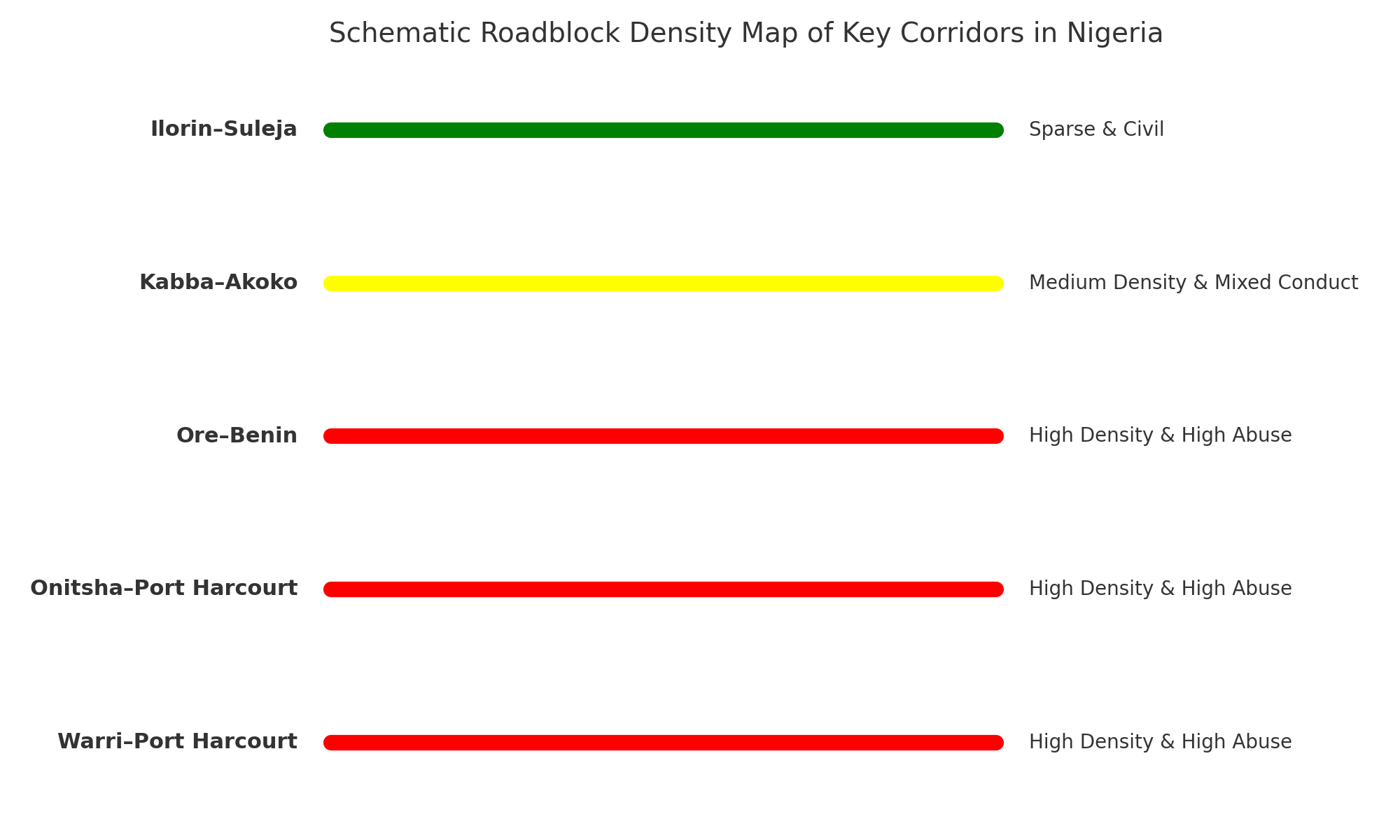
A recent nationwide assessment by EYE-ON-SECURITY—a coalition of veteran journalists from respected media institutions across Nigeria and Africa—has uncovered alarming trends in the conduct and distribution of security roadblocks across the country. The evaluation, conducted in collaboration with continental organizations such as the Media Foundation for West Africa (MFWA), African Freedom of Information Centre (AFIC), and the African Platform on Access to Information (APAI), revealed a troubling mix of abuse, inefficiency, and misallocation of security resources along major road corridors.
The Mission

EYE-ON-SECURITY’s mandate is to promote accountability and excellence within Nigeria’s security ecosystem. With backing from continental stakeholders, including institutions with consultative and observer status at the UN and the African Commission on Human and Peoples’ Rights, the coalition undertook a comprehensive field tour to observe the presence and conduct of various roadblocks—military, police, customs, immigration, road safety, vehicle inspection officers, civil defence, and civilian taskforces.
Key Findings
The road audit, which spanned several strategic routes across Nigeria, uncovered regional disparities and a disturbing pattern of misconduct:
1. Lagos – Akure – Kabba – Lokoja – Abuja
Observation: Sparse and generally civil presence from Lagos to Akure, with security officials largely performing routine checks.
Exception – Kabba–Akoko Axis:
In this stretch, commuters reported prolonged stops and aggressive questioning. For instance, a bus driver recounted how officers demanded to inspect all luggage without warrants and delayed them for over 30 minutes without explanation. Passengers who questioned the delay were met with threats of detention.
Impact: Although not the most abusive, the shift from civility to hostility along this route disrupts the otherwise seamless journey and highlights inconsistency in enforcement practices.
2. Lagos – Ibadan – Ilorin – Mokwa – Bida – Suleja
Observation: Security presence is minimal, and personnel seemed disengaged.
Instance: A trader traveling from Ilorin to Abuja noted that officers barely glanced at vehicles, and in some cases, they waved cars through without checking. While this might suggest ease of movement, it also raises questions about security effectiveness on a route frequently used by interstate travelers.
Impact: While commuter harassment is low, the lack of diligence could expose the corridor to unchecked criminal activities or smuggling.
3. Lagos – Ijebu Ode – Ore – Benin
Observation: Roadblocks become increasingly frequent after Ijebu Ode.
Instances of Concern:
- A luxury bus driver shared how officers at a checkpoint before Ore demanded N1,000 “for passage,” threatening to delay the entire bus if not paid.
- Near Benin, a group of customs officers stopped vehicles and aggressively searched passengers’ goods. A woman with fabric rolls was accused of smuggling, despite having receipts. She was forced to “settle” them with cash before being allowed to proceed.
Impact: This route becomes a gauntlet of extortion. Many commercial drivers build unofficial payments into their transport fares, passing the cost onto passengers.
4. Benin – Agbor – Asaba
Observation: Military checkpoints appear disciplined but still contribute to gridlocks.
Instances of Concern:
- Several trucks were seen lined up at a military checkpoint just before Asaba, causing an hour-long delay.
- Near the Niger Bridge, Oshimili South LGA revenue officers harassed commercial vehicle operators. One driver shared that he was dragged from his vehicle and forced to pay multiple levies, none of which had clear documentation.
Impact: The economic loss from long delays and the psychological toll of intimidation is high. Passengers feel violated rather than protected.
5. Onitsha – Owerri – Elele – Port Harcourt
Observation: The most oppressive corridor with relentless checkpoints.
Disturbing Instances:
- From the Imo-Rivers border, checkpoints are set every 50–100 metres. At each stop, security agents demand “clearance fees,” ranging from N200 to N1,000.
- A commuter recounted how a uniformed officer slapped a tricycle driver who refused to pay “weekly dues.” Another passenger’s phone was seized for attempting to record the incident.
Impact: This corridor represents state-enabled extortion at scale. With every 15–20 minutes spent at each checkpoint, passengers lose time and morale. It’s described as “a journey of fear.”
6. Benin – Sapele – Warri – Patani – Port Harcourt
Observation: High roadblock density with multi-agency clusters.
Hotspot – Koko Junction:
- Known among drivers as a “no-go area” if you lack cash. A trailer driver said he typically budgets N5,000–N10,000 to “settle” different teams, including customs, FRSC, NSCDC, and taskforces.
- Some agents reportedly use force or threats of impoundment to extract money. Buses without documentation—even when not legally required—are detained until bribes are paid.
Impact: The presence of multiple agencies at one spot suggests poor coordination and rampant corruption. Commercial operators mark the area on their maps as “toll zone” and avoid it if possible.
Overall Implication

Despite this heavy security presence, crime rates remain high. Banditry, highway robberies, and smuggling continue, prompting many to ask:
“Are these checkpoints truly about security, or are they a revenue racket disguised in uniforms?”
This reality undermines public trust in law enforcement, wastes productive time, and cripples legitimate economic activity.
Public Outcry and Questions

Commuters interviewed during the assessment expressed deep concern over the economic and psychological toll of these roadblocks. Delays, financial extortion, and disrespectful treatment are routine, with some questioning the true purpose of these checkpoints—especially in the face of rising crime rates across the regions surveyed.
Mrs. Grace Udo, Trader, Lagos to Benin Route:
“I was stopped three times in just 40 minutes. They searched my goods and claimed I needed a clearance. I had to pay N2,000 to avoid them seizing my fabrics.”
Okafor Uche, Commercial Driver, Warri–Patani Route:
“Koko Junction is where we suffer most. Every agency wants their share. If you argue, your vehicle will be grounded.”
Blessing Emeh, Passenger, Onitsha–Port Harcourt Route:
“At one checkpoint, a police officer took my phone because I tried recording them. I felt helpless.”
Ahmed Musa, Luxury Bus Operator, Ilorin–Suleja Corridor:
“That’s the best route—less harassment. But the officers barely check anything. It’s more relaxed, maybe too relaxed.”
“How can we explain the excessive roadblocks in the South-South and South-East when security has not improved?” one other traveler queried. “Instead, we lose valuable time, money, and dignity on roads meant for freedom of movement.”
Call to Action
The EYE-ON-SECURITY coalition is calling on the Presidency, National Assembly, and heads of security agencies to:
- Reassess the criteria for establishing roadblocks.
- Investigate and discipline erring personnel, both uniformed and civilian.
- Launch publicly accessible hotlines for reporting misconduct at roadblocks.
- Institute performance-based accountability for field officers to align road presence with crime-prevention outcomes.
Until then, Nigerians continue to face what many now describe as “institutionalized roadside extortion” masquerading as security checks.