By Fresh Facts Features Desk
Procrastination—a word that evokes guilt, frustration, and the all-too-familiar feeling of time slipping through our fingers. But beyond being a modern nuisance, procrastination is as ancient as human civilization itself. In fact, the philosophers of Ancient Greece coined a term for it: akrasia—the act of doing something against one’s better judgment.
In today’s hyper-digital world, procrastination has evolved into a more sophisticated foe. The endless buzz of notifications, social media feeds, and binge-worthy series means that distractions are just a tap away. And despite knowing what’s best for us, we often find ourselves falling prey to the very habits we wish to escape.
According to psychologists, one of the culprits is something called present bias—our tendency to prioritize short-term gratification over long-term gains. It’s why we’ll often choose Netflix over the gym, despite knowing the latter is far better for our health in the long run.
But if procrastination is such a well-known enemy, why can’t we shake it?
Why We Procrastinate
Dr. Tim Pychyl, a leading expert on procrastination, identified the issue in a 2013 study: procrastination is not a time-management problem—it’s an emotional one.
“When a task feels difficult, stressful or overwhelming, we naturally want to escape those negative feelings,” Pychyl explained. “So, we put it off.”
Whether it’s anxiety about failing, fear of criticism, or the daunting nature of starting something new, we often choose avoidance. The result is an internal tug-of-war—between the need to act and the desire to retreat.
The Procrastination Prescription: A 4-Step Cure
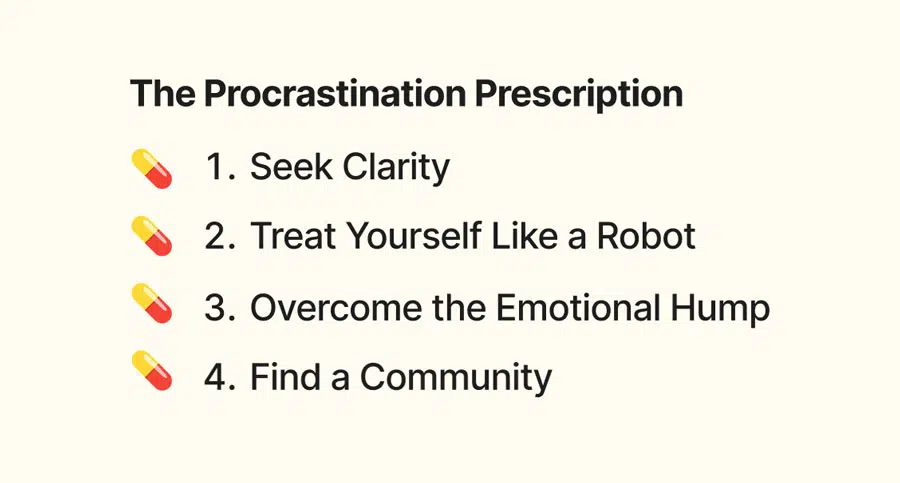
In response to this growing challenge, productivity experts have formulated a new framework dubbed The Procrastination Prescription, offering four strategic steps to combat the cycle of delay and discontent. Each phase is designed to address a root cause of procrastination and guide individuals toward better focus and fulfilment.
Step 1: Seek Clarity
Clarity, it seems, is the first antidote to procrastination. When we’re unsure about why a task matters or what exactly needs to be done, we fall into a state known as uncertainty paralysis.
Two actionable methods can help:
- The 5 Whys Technique: By repeatedly asking “why” we’re avoiding a task—typically five times—we can trace our reluctance to its emotional source. A student may find that the fear of writing an essay stems not from laziness but from a deep-seated fear of criticism.
- Growth Mindset Alignment: Productivity is deeply tied to how we think and feel. Reframing self-doubt into opportunities for learning—such as turning “I can’t do this” into “I can’t do this yet”—can shift attitudes and spark action.
Step 2: Treat Yourself Like a Robot
Once we understand the “why,” the next step is to build systems that prevent procrastination altogether.
- Build a Personal Algorithm: Just as robots follow a set of programmed instructions, individuals can design morning routines or task sequences that lead to automatic action. Simple rituals like journaling or stretching can kickstart focus.
- Change “And” to “Or”: Many delay action waiting for ideal conditions—“I’ll do it when I have time and energy and a clean workspace.” Replacing and with or creates more opportunities to act: “I’ll work if I have time or energy or”
Step 3: Overcome the Emotional Hump
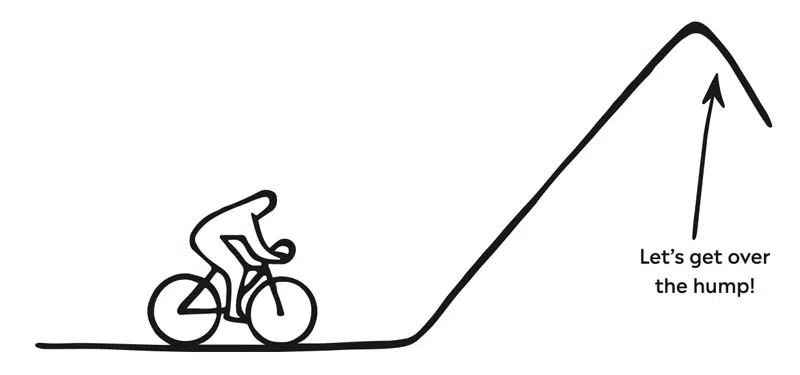
Sometimes, the hardest part isn’t the task—it’s starting it. The emotional resistance can feel insurmountable.
- The 5-Minute Timer Rule: Commit to just five minutes. Often, once we start, momentum takes over and the task feels less intimidating.
- The Reitoff Principle: When emotional burnout sets in, it’s okay to take a break. Rather than forcing productivity, consciously write off the time, rest, recharge, and return stronger.
Step 4: Find a Community
Isolation intensifies procrastination. But in a community, the burden becomes lighter.
- Accountability Buddy System: Studies show we’re more likely to keep promises made to others than to ourselves. Partnering with someone—even a colleague or peer—can create a powerful support structure.
- Join a Productivity Lab: Engaging with a community of like-minded people allows for shared learning, vicarious mastery, and a boost in motivation. Productivity Lab, an online hub created to tackle procrastination, serves as a testing ground for new habits and strategies, helping users to track growth and overcome setbacks together.
The Bottom Line
Procrastination is not a moral failing—it’s a response to emotional discomfort and mental overload. But by understanding its psychological roots and applying practical, science-backed solutions, individuals can break free from the trap.
As the age-old saying goes: “The best time to plant a tree was 20 years ago. The second-best time is now.”
And now, with the right tools in hand, might just be the perfect time to start.
For more insightful features, human interest stories, and productivity tips, stay tuned to Fresh Facts Magazine—where knowledge meets action.