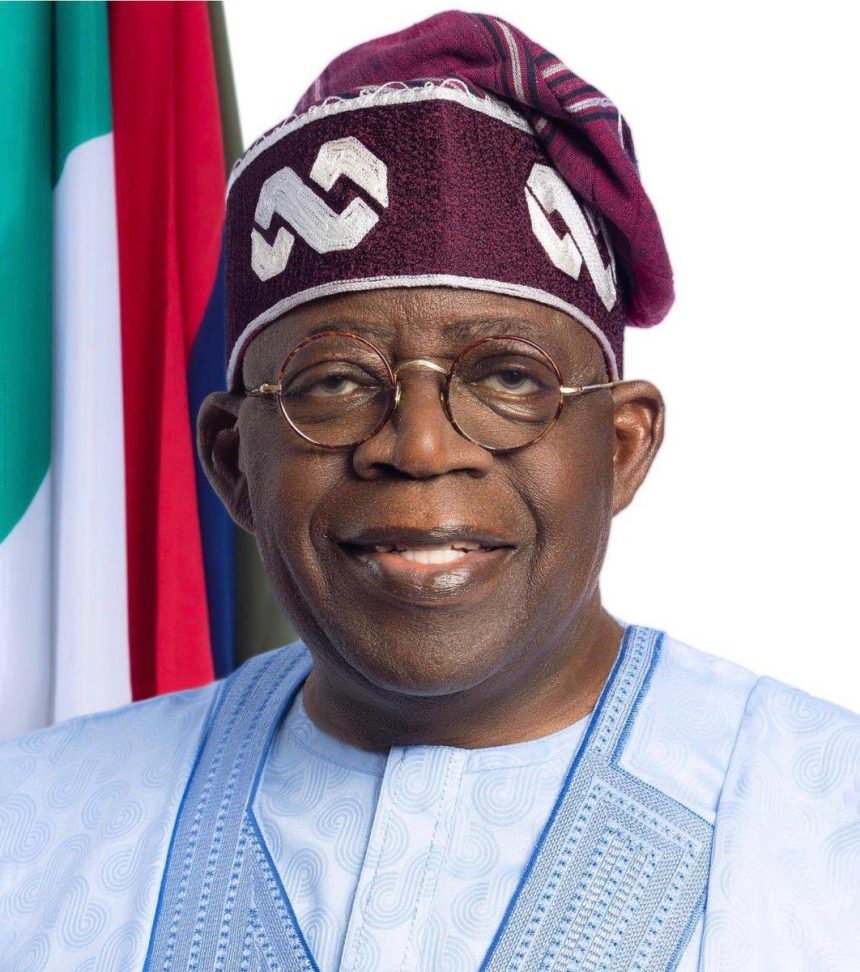
President Bola Ahmed Tinubu’s administration has embarked on one of the most far-reaching reform programmes in Nigeria’s recent history. Since May 29, 2023, the government has attempted to change the economic rules that had governed the country for years, with the stated objective of creating a more productive, competitive and financially sustainable economy.
The reforms have been wide-ranging, covering fuel subsidy, foreign exchange, taxation, banking, petroleum, electricity, agriculture, mining, education, healthcare, social protection, infrastructure, digitalisation, security and aspects of democratic governance.
At the heart of the reform programme is a difficult proposition: Nigeria must endure significant short-term adjustments in order to create the foundation for long-term economic stability and prosperity.
The central question, however, is whether the gains from these reforms will eventually reach ordinary Nigerians.
A FUNDAMENTAL ECONOMIC RESET
One of the most consequential decisions was the removal of the petrol subsidy. For years, government expenditure on subsidising petrol consumed enormous public resources, while concerns persisted about corruption, smuggling, inefficiency and the unequal distribution of subsidy benefits.
Its removal immediately changed the economics of transportation, household consumption and business operations. Petrol prices rose sharply, increasing transport fares, food distribution costs and the operating expenses of businesses that depend on fuel and generators.
The government gained greater fiscal space, but households lost purchasing power.
This created the defining contradiction of the reform era: the government’s fiscal position could improve while the economic position of many citizens deteriorated in the short term.
The success of subsidy reform will therefore ultimately depend on what government does with the resources released by it—whether they translate into infrastructure, jobs, social protection, public services and productive investment.
THE NAIRA AND FOREIGN EXCHANGE REFORM
The administration also dismantled the previous multiple-exchange-rate structure and moved towards a more market-oriented foreign-exchange regime.
The objective was to reduce distortions, eliminate opportunities for arbitrage, improve transparency and restore confidence in the foreign-exchange market.
The immediate consequence was a substantial depreciation of the naira. This increased the cost of imported goods, machinery, raw materials and services, placing additional pressure on businesses and consumers.
However, the reform also sought to create a more realistic exchange-rate environment capable of attracting investment and encouraging domestic production.
For the reform to succeed fully, Nigeria must move beyond simply allowing the naira to find its market value. The country needs stronger exports, higher oil and gas production, non-oil export growth, greater domestic manufacturing and reduced dependence on imported goods.
In other words, exchange-rate reform can stabilise the market, but production must ultimately strengthen the currency.
TAX REFORM AND REVENUE MOBILISATION
Another major component is the restructuring of Nigeria’s tax system.
The new tax architecture is designed to simplify taxation, improve administration, reduce fragmentation and increase the efficiency of revenue collection. It is also intended to make the system more digital and coordinated.
The broader challenge is Nigeria’s historically low revenue-to-GDP ratio. Government cannot sustainably finance infrastructure, education, healthcare, security and social programmes without sufficient domestic revenue.
But tax reform must also avoid strangling businesses and households.
The real test will therefore be whether Nigeria can create a system in which government collects more revenue without making productive economic activity unnecessarily expensive or complicated.

BANKING SECTOR REFORM
The recapitalisation of the banking sector represents another attempt to prepare the financial system for a larger economy.
Higher capital requirements are intended to make banks stronger, more resilient and better positioned to finance large-scale economic activity.
But recapitalisation should not end with stronger balance sheets.
The bigger question is whether Nigerian banks will channel more affordable credit into manufacturing, agriculture, housing, mining, infrastructure, exports, technology and small businesses.
A financially stronger banking sector must become an engine of production rather than simply a safer custodian of financial assets.
OIL, REFINING AND THE ENERGY ECONOMY
The petroleum sector remains central to Nigeria’s economic future.
The administration has pursued policies aimed at attracting upstream investment, increasing production, reducing crude theft and encouraging domestic refining and gas utilisation.
The emergence of large-scale domestic refining capacity offers Nigeria an opportunity to reduce dependence on imported petroleum products, conserve foreign exchange and develop petrochemical and industrial value chains.
But refining alone will not solve Nigeria’s energy problems.
The country must also secure crude supplies, address pipeline vandalism and oil theft, improve investment conditions, expand gas infrastructure and create a competitive energy market.
GAS AND COMPRESSED NATURAL GAS
The government’s push towards gas and compressed natural gas is partly a response to the economic consequences of petrol subsidy removal.
CNG can potentially provide cheaper transportation fuel while allowing Nigeria to exploit its substantial natural-gas resources.
The broader opportunity is much larger than transportation. Gas can support electricity generation, fertiliser production, petrochemicals, manufacturing and industrial development.
The challenge is to ensure that gas becomes an industrial development platform rather than another commodity that Nigeria primarily exports without sufficient domestic value addition.
ELECTRICITY REFORM
The Electricity Act and broader electricity reforms seek to create greater participation by states and private investors and reduce the excessive centralisation of the electricity market.
Nigeria’s power challenge remains one of the biggest constraints on economic development.
Businesses spend enormous resources on alternative electricity generation, while unreliable power increases production costs and makes Nigerian products less competitive.
Electricity reform therefore has implications far beyond the power sector. Reliable electricity could reduce the cost of manufacturing, improve productivity, create jobs and make small businesses more viable.
Transmission limitations, distribution losses, metering gaps, gas shortages and sector liquidity problems remain significant obstacles.

AGRICULTURE AND FOOD SECURITY
Agriculture has become particularly important because of the severe pressure on food prices.
The administration has promoted mechanisation, including the rollout of tractors and agricultural equipment, while also focusing on improving production and agricultural value chains.
But Nigeria’s agricultural crisis cannot be solved by tractors alone.
Farmers need security, affordable credit, irrigation, improved seeds and fertiliser, storage facilities, rural roads, processing plants and reliable markets.
The strategic objective should be to move Nigerian agriculture from subsistence and fragmented production towards commercially integrated value chains capable of producing food at scale while creating employment and export opportunities.
MINING AND ECONOMIC DIVERSIFICATION
Mining represents another potential source of diversification.
Nigeria possesses significant deposits of solid minerals and critical minerals that could become increasingly important in the global energy and technology transition.
Government efforts to improve licensing and investment conditions could attract capital into the sector.
But the real economic benefit will come from processing minerals domestically rather than simply extracting and exporting raw materials.
Nigeria must therefore pursue an integrated mining strategy involving exploration, extraction, processing, manufacturing and host-community development.
EDUCATION AND HUMAN CAPITAL
The reform programme also extends into education.
The establishment and expansion of student financing through NELFUND, alongside greater emphasis on technical and vocational education, STEM and employable skills, represents an attempt to link education more directly with the labour market.
Nigeria’s young population is one of its greatest potential advantages.
But a large youth population becomes an economic liability when young people lack quality education, employable skills and opportunities.
The next phase therefore needs to place greater emphasis on vocational training, digital skills, apprenticeships, entrepreneurship and industry-linked education.
HEALTHCARE
Healthcare reforms have focused on strengthening primary healthcare, expanding insurance coverage and improving health-sector financing and performance.
The administration has reported progress against several health-sector indicators, but significant challenges remain.
Many Nigerians still face high out-of-pocket medical expenses, shortages of health personnel, inadequate facilities and uneven access to essential medicines.
Healthcare reform must ultimately be judged by whether ordinary citizens can obtain quality treatment without being pushed into financial hardship.
SOCIAL PROTECTION AND THE MINIMUM WAGE
Perhaps the most important response to the social consequences of economic reform has been the expansion of social protection.
Cash transfers, livelihood programmes and other interventions have been introduced to cushion vulnerable households.
The minimum wage was also increased from ₦30,000 to ₦70,000 in 2024.
Yet inflation can quickly erode nominal wage increases.
The real challenge is therefore to ensure that wages rise faster than the cost of living and that social protection becomes a permanent, transparent and properly targeted national system.
The ultimate objective should be to move citizens from relief to resilience and from resilience to economic independence.
INFRASTRUCTURE AND THE PRODUCTIVE ECONOMY
Infrastructure is the bridge between macroeconomic reform and tangible economic development.
Roads, railways, ports, electricity, irrigation, housing and digital infrastructure can reduce the cost of doing business and connect producers to markets.
The administration has placed substantial emphasis on capital expenditure, but the quality and economic impact of spending matter as much as the size of the budget.
Nigeria needs infrastructure projects that increase productivity, reduce logistics costs, expand trade and unlock private-sector investment.

DIGITAL ECONOMY
Digitalisation represents another major opportunity.
Nigeria already possesses a dynamic fintech ecosystem, widespread digital payments and a growing technology sector.
The next stage should involve expanding digital public infrastructure, improving digital identity, supporting software and technology exports, encouraging artificial intelligence applications and strengthening the creative economy.
A successful digital economy could provide young Nigerians with opportunities that are not constrained by the traditional limitations of geography and physical infrastructure.
SECURITY AS AN ECONOMIC REFORM
Security is inseparable from economic development.
Farmers cannot produce efficiently when they fear attacks. Investors will hesitate to commit capital where infrastructure is vulnerable. Oil production suffers when pipelines are attacked, while mining communities can become targets for criminal networks.
Security reform must therefore be viewed not merely as a policing issue but as an economic necessity.
The debate around state police and greater decentralisation of security must be accompanied by professional standards, constitutional safeguards, independent oversight, adequate funding and protection of citizens’ rights.
DEMOCRATIC AND INSTITUTIONAL REFORMS
The administration has also pursued reforms touching electoral administration, local-government autonomy and broader public-sector governance.
Greater financial autonomy for local governments could improve grassroots development if accompanied by credible elections, transparent budgets, effective auditing and stronger institutional capacity.
Similarly, electoral reform will ultimately be measured by whether Nigerians believe that their votes genuinely determine who governs them.
Economic transformation cannot be separated from institutional credibility.
WHAT THE IMF AND WORLD BANK ARE SAYING
The international financial institutions have broadly recognised progress towards macroeconomic stabilisation.
The IMF’s assessment, as reflected in the source material, points to improved fiscal and external positions, better functioning of the foreign-exchange market and stronger macroeconomic resilience.
Growth has also remained positive.
But the IMF’s message is not an unconditional endorsement.
It has highlighted persistent concerns around poverty, food insecurity, infrastructure, electricity-sector losses, revenue mobilisation, fiscal transparency and the need to strengthen social protection.
The World Bank similarly recognises progress in restoring macroeconomic stability and improving fiscal and external conditions, while warning that household incomes remain under pressure and poverty remains high.
The message is therefore clear:
Nigeria may be moving towards greater macroeconomic stability, but stability must eventually translate into improved living standards.
THE HUMAN COST OF REFORM
This remains the most politically sensitive aspect of the Tinubu reform agenda.
For many Nigerians, macroeconomic statistics are less important than the price of food, transport fares, electricity bills, school fees, rent and medical expenses.
The reform period has imposed real costs.
Inflation and the depreciation of the naira have reduced purchasing power. Businesses have faced higher energy and logistics costs. Families have been forced to adjust consumption.
This is why the administration’s political future cannot depend solely on explaining why reforms were necessary.
It must demonstrate what the sacrifices have produced.

THE CASE FOR CONTINUITY
The strongest argument for continuity is that structural reforms rarely produce their full benefits immediately.
Abandoning reforms midway could recreate the distortions that the government has spent years attempting to eliminate.
Reversing subsidy reform, returning to unsustainable exchange-rate controls or abandoning fiscal restructuring could restore short-term comfort while creating long-term instability.
But continuity should not mean refusing to acknowledge what is not working.
The more credible argument is:
Continuity + Correction + Inclusion + Accountability.
The next phase should consolidate reforms that are working, correct those producing excessive hardship, broaden social protection, accelerate productive investment and strengthen transparency.
WHAT NIGERIANS EXPECT BY 2027
By the next election cycle, citizens are likely to judge the administration less by the number of reforms announced and more by their everyday experiences.
The questions are straightforward:
- Is food becoming more affordable?
- Is transportation becoming cheaper?
- Is electricity more reliable?
- Are wages keeping pace with inflation?
- Are more Nigerians finding productive jobs?
- Is the naira becoming more stable?
- Is domestic production increasing?
- Are businesses becoming more competitive?
- Are farms and communities safer?
- Is healthcare becoming more affordable?
- Are young Nigerians finding meaningful opportunities?
- Are government institutions becoming more accountable?
These questions represent the real political scorecard of the reform programme.
FROM REFORM TO PROSPERITY
The first stage of the Tinubu programme has largely been about changing the rules of the Nigerian economy.
The next stage must be about changing economic outcomes.
The desired chain is clear:
Reform → Stability → Investment → Production → Jobs → Higher incomes → Lower poverty → Greater prosperity.
Nigeria appears to have made progress on the first parts of this chain.
The more difficult task is completing the transition from stability to broad-based prosperity.
That will require cheaper and more reliable energy, stronger agriculture, industrial expansion, infrastructure investment, better education, affordable healthcare, functioning financial markets, security and a social-protection system capable of protecting vulnerable citizens.

THE CENTRAL VERDICT
President Tinubu’s reform programme is neither a simple success story nor a failure.
It is a major economic restructuring programme whose strongest achievements are visible in the attempt to correct longstanding fiscal, monetary and structural distortions.
Its greatest weakness is the gap between macroeconomic improvement and the lived economic experience of many Nigerians.
The administration therefore faces a decisive challenge: to prove that today’s sacrifice is creating tomorrow’s prosperity.
A second term, if pursued, would need to be built not simply around defending the reforms already undertaken but around delivering the next stage of the transformation.
The first phase was about stabilising Nigeria and changing the rules.
The next phase must be about production, jobs, lower poverty, stronger institutions and improved living standards.
Ultimately, the case for continuity will not be won by rhetoric.
It will be won in the marketplace, on the farm, in the factory, at the power meter, in the classroom, in the hospital, on the road and inside the household budget.
The first phase changed the rules. The next phase must change lives.
THE BIG POLITICAL AND ECONOMIC TEST
The Tinubu reform agenda can therefore be understood as a four-year wager:
Nigeria will accept difficult structural adjustments today in exchange for a stronger, more productive and more prosperous economy tomorrow.
The success of that wager will depend on whether government can now move decisively from reform to results.
Four years to turn reform into prosperity.