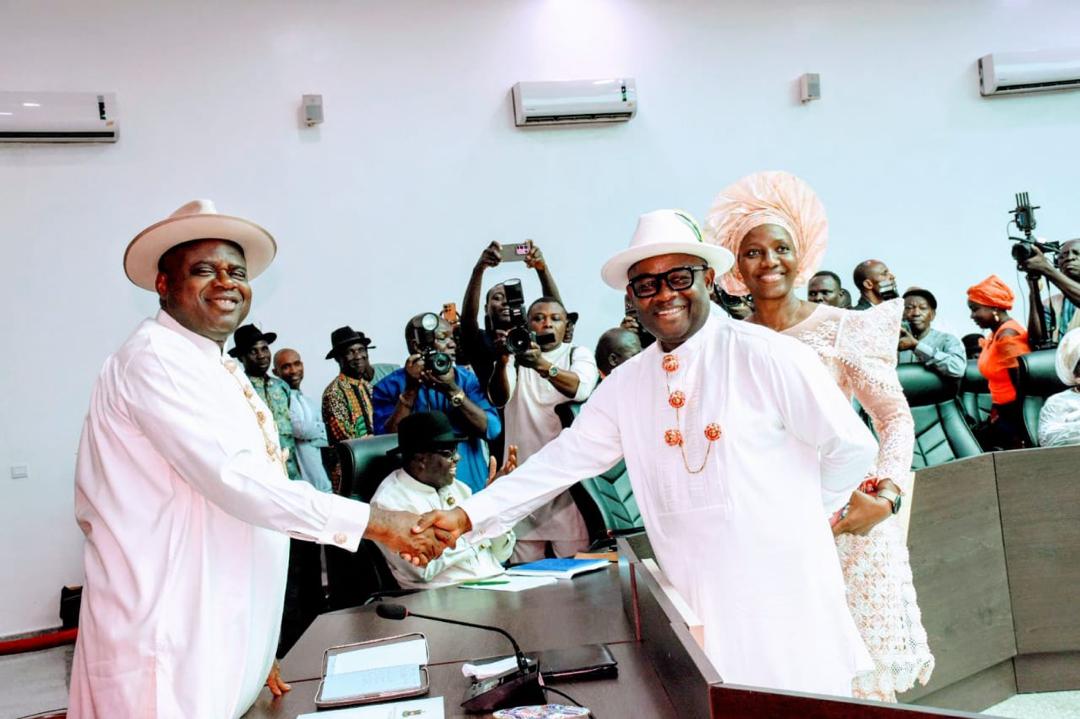
The emergence of Olatunji Rilwan Disu, psc, as Nigeria’s new Inspector-General of Police (IGP) comes not only at a time of deep national insecurity but amid palpable controversy. He steps into office following the resignation of Kayode Adeolu Egbetokun — a departure widely described in political and security circles as contentious and unsettling.
For Disu, the handover was swift. The expectations are enormous. And the criticisms have been immediate.
The Backlash: Questions Before Commencement
No sooner had his appointment been announced than debate erupted across political, civil society, and security platforms.
Critics have raised concerns along several lines:
- Process and Transparency
Some stakeholders questioned whether due process and seniority considerations were fully observed. Within a hierarchical institution like the Nigeria Police Force (NPF), promotions and appointments are highly sensitive. Allegations — whether substantiated or speculative — of bypassed officers can create morale fractures within the ranks.
- Continuity vs. Change
Given the controversy surrounding Egbetokun’s exit, skeptics argue that Disu’s appointment represents continuity rather than reform. For a public hungry for structural change, especially in the wake of corruption allegations and operational failures, continuity can be perceived as stagnation.
- Regional and Political Undertones
As with many high-profile federal appointments in Nigeria, debates over federal character, political alignment, and regional balance surfaced almost immediately. While such conversations are often politically amplified, they reflect the deep trust deficit citizens have toward central institutions.
- Public Confidence Deficit
The Nigeria Police Force is still recovering from the reputational damage of the #EndSARS protests and persistent allegations of abuse and extortion. For some critics, the question is not just who leads, but whether leadership change alone can repair systemic dysfunction.
These criticisms form the backdrop against which Disu must begin his tenure — not as abstract noise, but as a real legitimacy challenge.
The Security Landscape: A Nation on Edge
Even without controversy, the task ahead would be formidable.
Nigeria’s security crisis is multi-dimensional:
- North-East: Insurgency remnants and stabilization challenges
- North-West: Kidnapping and banditry evolving into structured criminal enterprises
- North-Central: Persistent farmer-herder conflicts and communal violence
- South-East: Separatist-linked violence and attacks on security facilities
- Urban Centers: Rising cybercrime, cultism, and organized fraud networks
The police, constitutionally the lead internal security agency, must coordinate intelligence, prevention, investigation, and prosecution — often with limited logistics and overstretched manpower.
The question confronting Disu is whether he can transform a largely reactive institution into a proactive, intelligence-driven force.
Corruption: The Internal Enemy
Perhaps the most enduring challenge is corruption within the force.
From checkpoint extortion to allegations of compromised investigations, the perception of endemic corruption continues to erode public trust. While successive leaderships have promised reforms, citizens argue that enforcement has been inconsistent.
Disu’s credibility will depend heavily on how he handles:
- Internal disciplinary mechanisms
- Transparent investigation of misconduct
- Protection for whistleblowers within the force
- Merit-based promotions and postings
Corruption is not merely an ethical issue; it is a security vulnerability. A compromised officer can become an asset to criminal networks.
Without a decisive anti-corruption drive, broader reform will falter.
Institutional Morale: The Hidden Crisis
Beneath public debates lies another challenge: morale within the ranks.
Police officers frequently cite:
- Poor welfare and housing conditions
- Delayed allowances
- Inadequate equipment
- Psychological stress from frontline operations
A force battling both external threats and internal dissatisfaction cannot perform optimally. Reform must therefore balance discipline with welfare enhancement.
If the new IGP is perceived internally as politically imposed rather than institutionally earned, morale could suffer — making reform even harder.
Navigating Political Pressures
The Inspector-General operates in a politically charged environment. Election cycles, regional tensions, and federal-state power dynamics often test the neutrality of the police.
Public confidence will hinge on whether Disu can maintain operational independence while navigating political expectations.
Will the police be seen as impartial enforcers of the law — or as instruments of political convenience?
This perception battle may prove as important as operational success.
Reform Window: Narrow and Unforgiving
Leadership transitions create brief windows for bold action. The first months of Disu’s tenure will likely define public judgment of his leadership.
Early signals to watch include:
- Visible disciplinary action against corrupt officers
- Structural reforms in recruitment and promotion
- Deployment of technology for crime tracking and transparency
- Public engagement initiatives to rebuild trust
Symbolic gestures will not suffice. Nigerians are demanding measurable change.
A Leadership Test Beyond Ceremony
The controversy surrounding Disu’s appointment may either weaken or fortify his tenure.
If he confronts criticism with transparency, decisiveness, and reform-minded leadership, he could convert skepticism into support.
If, however, the appointment is perceived as business-as-usual in a force plagued by corruption and inefficiency, public cynicism will deepen.
Ultimately, the burden before Olatunji Rilwan Disu is not merely administrative — it is historical.
He leads a force struggling with trust, operating in a country facing complex security threats, and entering office under the cloud of controversy.
In Nigeria’s present climate, leadership is not defined by title — but by transformation.
Whether this moment becomes a turning point or another missed opportunity remains to be seen.