By Chidipeters Okorie
Delta, NIGERIA — The Chairman of the Integrity Group of Nigeria, Delta State Chapter, Comrade Bolum Martin Nwachukwu, has said Governor Sheriff Oborevwori’s performance has earned him broad support across the political divide in Delta State, with many residents wanting him to return for a second term.
Speaking with journalists in Warri, Delta State, Bolum said the governor’s growing acceptance was evident in the lack of a strong challenger to his re-election bid. He argued that many residents were satisfied with the direction of the administration and believed continuity would allow ongoing projects and programmes to continue.
However, Bolum said support for Oborevwori should also translate into support for President Bola Ahmed Tinubu, arguing that President Tinubu’s economic reforms had improved the financial position of state governments and given them more resources to execute development projects.
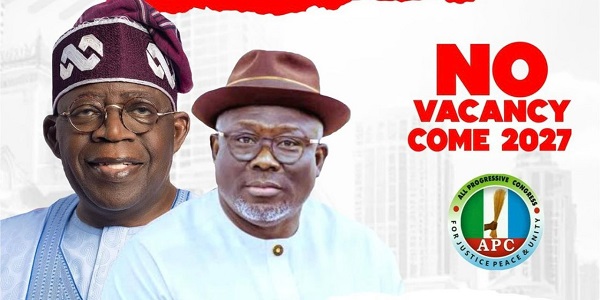
“You cannot love to vote for Governor Oborevwori and hate to vote for President Tinubu,” he said. “For us in Delta State, come 2027, it is APC 5/5, one party, one message.
According to him, Delta State has witnessed developments in health, education, roads, flyovers, bridges, youth empowerment, student support programmes and other sectors since the Oborevwori administration came into office.
He said, however, that it would be unfair to credit the governor alone for the state’s development without recognising the wider fiscal environment created by the Tinubu administration.
“Governor Sheriff Oborevwori has repeatedly acknowledged the importance of the resources and fiscal environment created by President Bola Ahmed Tinubu,” Bolum said. “The increased resources available to the state have enabled his administration to execute projects and deliver on its MORE agenda.”
Bolum argued that the increase in revenue available to State Governments had given Governors greater room to undertake capital projects and social programmes. He cited Anambra State Governor Chukwuma Soludo and Abia State Governor Alex Otti as examples of opposition governors who, he said, had acknowledged the importance of the Federal Government’s economic policies to development at the state level.
“Governors are performing well because President Tinubu has created an enabling environment. Nigerians should acknowledge the President,” he said.
He further argued that the improved fiscal position of the States was having an effect beyond infrastructure and capital projects, saying it was also helping governments meet their obligations to workers and maintain essential public services.
“Unlike what we experienced in the past, since President Tinubu came into office, we have not seen the same situation where governors are unable to pay salaries and accumulate huge arrears,” Bolum said. “We are also not seeing the kind of prolonged strikes by university workers and labour unions that became common in the past.”
He said the development should be viewed as part of the wider impact of increased revenues and fiscal reforms, arguing that regular payment of salaries and improved funding for public institutions were essential to economic stability.
The Integrity Group of Nigeria Delta State Chapter Chairman/Coordinator also referred to former Delta State Governor, Senator Ifeanyi Okowa, saying the former governor had spoken about the difficult financial circumstances in which governors previously operated and suggested that more could have been achieved under improved fiscal conditions.
Bolum said this showed that the effects of the Federal Government’s reforms should not be viewed solely through the lens of party politics. He defended President Tinubu’s decision to remove the petrol subsidy, describing it as one of the difficult decisions that previous administrations had recognised but struggled to implement.
He acknowledged that the policy had caused immediate hardship, particularly through higher transport and food costs, but said its success should ultimately be judged by its longer-term effects.
“Before the 2023 election, virtually every major political party acknowledged that the subsidy regime was unsustainable,” he said. “Previous administrations also recognised the problem, but removing the subsidy was politically difficult because of the consequences. President Tinubu came into office and took the decision.”
Bolum also listed several other policies which he believes are reshaping the economy. He mentioned foreign exchange reforms designed to improve transparency and reduce distortions in the market, as well as the recapitalisation of banks to strengthen financial institutions and improve their ability to support businesses and investment.
He described the administration’s tax reforms as another important part of its economic programme, saying efforts to simplify taxation, widen the revenue base and improve administration could make the system more predictable for businesses and investors.
The chairman also pointed to the student loan scheme and social intervention programmes, saying they were intended to ease pressure on families and widen opportunities for young Nigerians.
On agriculture, he said policies supporting local production, agricultural financing and food security were necessary to reduce dependence on imports and strengthen Nigeria’s domestic productive capacity.
He further highlighted the Renewed Hope Infrastructure Development Fund and other infrastructure initiatives, saying investment in roads, transport and related projects could stimulate economic activity and create jobs.
Bolum also praised electricity-sector reforms that allow greater participation by state and local governments, arguing that subnational governments could develop power solutions that better reflected the needs of their communities.
He said efforts to attract foreign and domestic investment, deepen the capital market and remove regulatory obstacles were also important to unlocking private-sector funding for economic development.
On manufacturing, he said policies aimed at supporting local production and reducing dependence on imported goods could, if sustained, strengthen the economy and create employment opportunities, particularly for young Nigerians.
Bolum maintained that revenue reforms and efforts to reduce leakages had increased the resources available to the three tiers of government. “The Federal Government has been able to block many of the leakages in the economy. The important thing is that these resources are not being kept for selfish purposes. They are being channelled back to the subnational governments—states and local governments,” he said.
He said the combination of fiscal and monetary reforms, infrastructure investment, electricity reforms, banking-sector recapitalisation, tax changes and measures to attract investment was gradually creating a stronger foundation for economic growth.
For Bolum, the real importance of the reforms is not simply what happens in Abuja, but how they affect ordinary Nigerians and improve the ability of states and local governments to deliver projects, pay workers and sustain public services.
He urged Nigerians to look beyond the immediate difficulties associated with some reforms and consider their long-term objectives.
“The ultimate measure should be whether these reforms lead to stronger institutions, increased production, more investment, better infrastructure, improved security and greater opportunities for ordinary Nigerians,” he said.
Bolum therefore urged Nigerians to continue supporting the Tinubu administration’s reform agenda, arguing that the full benefits of the policies would become clearer as they mature.