By Fresh Facts Magazine Investigations Desk
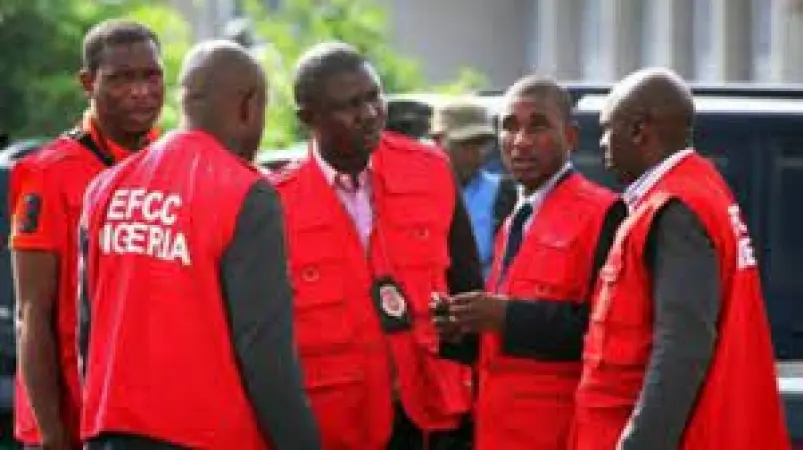
The sacred journey to Mecca, meant to be a pillar of faith for thousands of Nigerian Muslims, has once again been tainted by allegations of corruption. The Economic and Financial Crimes Commission (EFCC) has detained two senior officials of the National Hajj Commission of Nigeria (NAHCON) over suspected fraud tied to the 2025 Hajj operations.
According to highly placed EFCC insiders, the officials were taken into custody after refusing to refund allegedly misappropriated funds. “They are with us. We asked them to return the money they took, but they have yet to do so. That is why they remain in our custody,” a senior source revealed. While the anti-graft agency has withheld details of the sums involved, the development has once again reignited concerns about entrenched corruption in Nigeria’s Hajj administration.
Why Hajj Funds Remain a Corruption Hotspot
For decades, Nigeria’s Hajj operations have been plagued by allegations of fraud, inflated contracts, diversion of subsidies, and extortion of pilgrims. Every year, the Federal Government releases billions of naira in subsidies to cushion the cost of the pilgrimage, while state governments also chip in through their Muslim welfare boards. With over 60,000 Nigerian pilgrims participating annually, the financial stakes are enormous.
Insiders say this vast pool of funds—ranging from airfare and accommodation to feeding and logistics—is often poorly monitored, leaving loopholes for abuse. Past probes have revealed patterns: contracts awarded to cronies, subsidy funds siphoned into private accounts, and desperate pilgrims forced to pay more despite government interventions.
In August 2024, for instance, the EFCC invited then-NAHCON Chairman, Jalal Arabi, over alleged mismanagement of the ₦90 billion subsidy earmarked for the 2024 pilgrimage. Around the same period, the Independent Corrupt Practices and Other Related Offences Commission (ICPC) also swooped on senior NAHCON officials in connection with the same funds. The cycle of probes and arrests has done little to restore public confidence.
NAHCON Pushes Back
In a carefully worded statement, the Commission avoided confirming the arrests but stressed its commitment to transparency. Signed by its Assistant Director of Information and Publication, Fatima Usara, on behalf of Chairman/CEO Prof. Abdullahi Usman, the statement declared:
“The Commission would not shield any staff or process found wanting. This cooperation is a standing principle of our operations and our belief in due process and the rule of law.”
NAHCON also appealed for restraint, warning against what it described as “media trials” that could unfairly stigmatize individuals. “We respectfully urge the public and especially the media to exercise restraint on speculations and allow the appropriate authorities to conclude their work,” it said.
Pilgrims Bear the Brunt
While officials and agencies trade accusations, it is ordinary Nigerian pilgrims who suffer most. Rising costs, chaotic logistics, and repeated reports of poor feeding and accommodation in Saudi Arabia have left many disillusioned. In 2024, despite the government’s ₦90 billion subsidy, thousands of pilgrims complained that the fees they paid were still among the highest in Africa.
A pilgrim from Kano who participated in last year’s Hajj told Fresh Facts:
“Every year, they tell us the government has subsidized, but we still end up paying more. If they are investigating billions, then the truth is that the money is not reaching us.”
The Road Ahead
With the 2025 investigations still unfolding, analysts argue that deeper reforms—not just arrests—are needed. Transparency in procurement, independent auditing of subsidy funds, and digital tracking of payments have been suggested as ways to reduce the corruption web around Hajj operations.
For now, the EFCC has tightened its grip, but the unanswered question remains: how long before the cycle repeats itself?
Efforts to reach EFCC spokesperson, Dele Oyewale, for comments were unsuccessful as of press time.