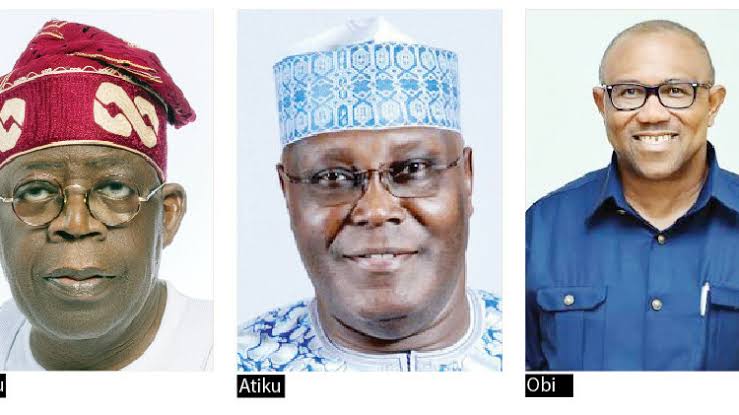
From Asaba to Calabar, Enugu and beyond, attacks on political gatherings, intimidation of opposition supporters and growing hostility threaten the credibility of Nigeria’s next general elections.
– By Fresh Facts Magazine Editorial Desk –
ASABA, Delta State — Nigeria’s journey towards the 2027 general elections is gradually becoming overshadowed by disturbing developments that threaten the very foundations of its democracy. From reported attacks on political convoys and campaign gatherings to the disruption of party meetings and alleged intimidation of opposition supporters, the country’s political environment is beginning to exhibit signs of intolerance that should worry every genuine democrat.
What should ordinarily be a period of political engagement, ideological competition and public persuasion is increasingly being characterised by allegations of violence, intimidation and the destruction of political property.
The emerging situation raises a fundamental question: Is Nigeria adequately prepared to guarantee a free, fair and peaceful electoral process in 2027, or are political actors gradually creating an atmosphere in which violence could become another instrument of political competition?
The question is particularly important against the background of reported attacks involving activities of the Nigeria Democratic Congress (NDC), particularly its political mobilisation around presidential candidate Peter Obi and his running mate, Rabiu Musa Kwankwaso.
Although the allegations surrounding individual incidents remain subject to investigation, the frequency of reported confrontations across different states suggests that Nigeria’s political class, security institutions and electoral authorities must urgently confront the growing threat.
The latest incident in Asaba, Delta State, where a political procession reportedly ended in bloodshed, has brought the danger into sharper focus.
ASABA: WHEN POLITICAL MOBILISATION TURNED DEADLY
On Saturday, November 7, 2026, a political procession organised by the Obedient/OK Movement in support of the NDC presidential candidate descended into violence along Nnebisi Road, Asaba.
The Delta State Police Command confirmed that one person lost his life while five others sustained injuries during the incident.
According to a statement issued by the Police Public Relations Officer, SP Bright Edafe, the Command had received intelligence suggesting the possibility of violence before the procession. Consequently, the organisers were invited to a security meeting and advised against conducting an open road procession.
The police said the organisers were encouraged to hold their political activities at a designated venue where adequate security could be provided. However, they allegedly disregarded the advice and proceeded with the procession.
Following a distress call, police operatives reportedly moved to the scene, evacuated injured persons to the hospital and reinforced security in the affected area. An investigation was subsequently initiated to establish the circumstances surrounding the violence.
However, the NDC and the Obedient Movement presented a different account, alleging that suspected political thugs attacked their supporters, vandalised campaign vehicles and injured several participants.
The movement demanded an independent investigation and the arrest of those responsible, including their alleged sponsors.
Meanwhile, the Delta State APC, through its spokesman, Charles Aniagwu, said he was unaware of the reported attack, while the party’s media representative, Valentine Onojeghuo, rejected allegations linking APC members to the incident, describing them as unsubstantiated.
These competing accounts underscore the importance of an impartial investigation.
Beyond determining who physically participated in the confrontation, the police must establish whether the violence was spontaneous or coordinated, whether there was a deliberate attempt to disrupt the political gathering and whether any individuals or groups financed or organised the attack.
One Nigerian has reportedly paid the ultimate price in an incident that should never have happened in a democratic society.
The tragedy must not become another forgotten entry in Nigeria’s long history of politically motivated violence.
BEYOND ASABA: A PATTERN THAT DEMANDS NATIONAL ATTENTION
Perhaps the most troubling dimension of the Asaba incident is that it did not occur in isolation.
In recent months, reports of attacks and disruptions involving political activities have emerged from different parts of the country, raising questions about the safety of political participation ahead of 2027.
CALABAR: ATTACK ON OBI-KWANKWASO’S CONVOY
On November 4, 2026, the campaign convoy of Peter Obi and Rabiu Musa Kwankwaso reportedly came under attack in Calabar, Cross River State.
Reports indicated that stones and other dangerous objects were thrown at vehicles conveying the political leaders, damaging their windscreens.
The incident reportedly occurred as the convoy returned from a courtesy visit to the Obong of Calabar and headed towards Metropolitan Hotel for a town hall meeting.
The Cross River State Police Command confirmed the attack, disclosed that a suspect had been arrested and promised a thorough investigation.
Although neither of the political leaders was reportedly injured, the incident exposed the vulnerability of political convoys and the danger such confrontations pose to supporters, motorists, traders and other innocent residents.
Political leaders should be able to move around the country to canvass support without becoming targets of violence.
ENUGU: GUN VIOLENCE AND ATTACKS ON PARTY MEMBERS
Enugu State has also featured prominently in reports of security challenges involving NDC activities.
One particularly disturbing incident concerned an alleged attack on party members during a ward meeting in Obuofia, Nkanu West Local Government Area, where the party claimed that eight members sustained gunshot injuries.
The Human Rights Writers Association of Nigeria (HURIWA) condemned the incident and called for a thorough investigation.
The Enugu State Police Command reportedly confirmed that armed hoodlums disrupted the gathering and injured participants.
Earlier, police investigations had also commenced into violent confrontations involving NDC members around Akanu Ibiam International Airport and the party’s campaign office in the GRA area.
While the circumstances surrounding the various incidents require careful examination, the underlying concern remains the same: political meetings and party activities must not become occasions for bloodshed.
DELTA: EARLIER DISRUPTION IN EFFURUN
In September 2026, a political mobilisation march by NDC supporters in Effurun, Uvwie Local Government Area of Delta State, was reportedly disrupted following a confrontation with suspected political thugs.
The incident attracted the attention of Governor Sheriff Oborevwori, who directed security agencies to investigate and ensure that anyone found culpable was brought to justice.
The recurrence of reported disturbances involving political activities in Delta State makes the latest Asaba tragedy particularly concerning.
It also places additional responsibility on the state government and security agencies to ensure that political disagreements do not degenerate into physical confrontations.
POLITICAL VIOLENCE IS NOT EXCLUSIVE TO ONE PARTY
It is important to establish that political violence is not an exclusive problem of the NDC or any particular opposition movement.
Reports documented by HURIWA and other media organisations have also highlighted attacks on APC supporters travelling to a campaign event in Katsina State, disruption of political activities in Abia State and the reported assault on human rights activist and African Action Congress presidential aspirant Omoyele Sowore in Ekiti State.
Similarly, the disruption of an APC presidential campaign rally in Lafia, Nasarawa State, attracted condemnation and calls for accountability.
These incidents reinforce the argument that political violence is a national democratic challenge rather than a problem that should be examined exclusively through partisan lenses.
No political party should enjoy a monopoly of political freedom, just as no opposition party should be denied the right to organise, mobilise or campaign.
THE BIGGER DANGER: WHAT THESE INCIDENTS MEAN FOR NIGERIA’S DEMOCRACY
The increasing reports of political violence carry implications that extend far beyond the immediate victims. If the trend is not decisively addressed, Nigeria could enter the 2027 electoral season with an atmosphere of fear, suspicion and hostility capable of undermining public confidence in the electoral process.
- A direct threat to multiparty democracy
Democracy derives its legitimacy from the freedom of citizens to make political choices without intimidation.
The Nigerian Constitution guarantees freedom of expression, peaceful assembly and association. These rights are not privileges that can be granted or withdrawn by political parties, governors or public officeholders.
When political supporters are attacked, campaign offices disrupted and convoys subjected to violence, the message to ordinary citizens is that participation in opposition politics could come with serious personal risks.
This can discourage citizens from attending political meetings, joining political organisations or openly supporting candidates of their choice.
The danger is that Nigeria could retain the outward appearance of a multiparty democracy while the fundamental freedoms that sustain it are progressively weakened.
- The possibility of an uneven electoral playing field
An election cannot be genuinely competitive when some political parties can freely mobilise while others struggle to protect their supporters from intimidation.
If allegations of deliberate attacks against NDC activities are established, they would raise serious questions about whether opposition parties enjoy equal opportunities to participate in the political process.
Political competition should be determined by the strength of ideas, policy proposals, leadership credibility and public acceptance.
It should never be determined by the capacity to deploy armed supporters, intimidate opponents or frustrate rival political activities.
Even where there is no evidence of direct government involvement, failure to prevent or prosecute politically motivated violence could create an environment that unfairly benefits those with greater access to political power.
The government must therefore demonstrate, through concrete action, that the protection of political rights is not determined by party affiliation.
- The danger of escalation before election day
Perhaps the most frightening implication is the possibility that the present incidents could develop into more organised violence as political activities intensify.
The 2027 elections are expected to attract significant political interest, particularly with the emergence of new alliances, defections and competing presidential ambitions.
When supporters begin to perceive attacks on their members as deliberate attempts to silence them, the temptation to organise counterattacks or retaliatory actions may increase.
Such a development could create a dangerous cycle of political revenge in which innocent citizens become casualties of conflicts they neither initiated nor control.
The Asaba tragedy, which has already claimed a life, should serve as a painful reminder that political confrontations can quickly become fatal.
Nigeria must not wait until widespread political bloodshed occurs before taking preventive measures.
- A defining test of police neutrality and professionalism
The unfolding developments present a significant test for the Nigeria Police Force.
The police are responsible for maintaining public order, preventing crime and protecting lives and property. These responsibilities extend equally to the ruling party, opposition parties, political candidates and ordinary citizens.
The Delta State Police Command’s disclosure that it warned the organisers against an open road procession raises important questions about preventive security.
While political organisers have a responsibility to comply with reasonable security arrangements, security advice must not become an instrument for unnecessarily restricting constitutional freedoms.
There is also the question of whether adequate security personnel were deployed to the rally and whether the intelligence received by the Command was sufficiently acted upon to prevent the eventual tragedy.
Where credible intelligence suggests an impending attack, the responsibility of security agencies should extend beyond advising organisers to change venues. They must also take reasonable steps to identify potential threats, prevent criminal activity and protect participants.
The police must investigate the Asaba incident professionally and independently, without allowing political considerations to influence the outcome.
- Nigeria’s democratic reputation at stake
Nigeria occupies a significant position in Africa and frequently presents itself as a defender of democratic governance on the continent.
However, repeated attacks on political opponents, intimidation of campaigners and failure to prosecute perpetrators could weaken the country’s democratic credentials.
International election observers, diplomatic missions, human rights organisations and democracy advocacy groups will inevitably pay attention to how Nigeria manages political competition ahead of 2027.
A country unable to guarantee the safety of political candidates and their supporters during campaigns may find it difficult to convince the international community that its electoral process is sufficiently free and fair.
More importantly, democratic credibility should matter to Nigeria because its citizens deserve a political environment in which they can make choices without fear.
- Economic losses and growing social divisions
Political violence also carries economic and social consequences.
Whenever political gatherings degenerate into violent confrontations, traders close their shops, motorists abandon affected routes, businesses lose productive hours and residents become exposed to unnecessary danger.
The destruction of campaign vehicles and other property represents additional economic losses.
In a country already grappling with unemployment, insecurity, inflation and economic hardship, political violence introduces another layer of uncertainty that ordinary citizens should not have to endure.
It can also deepen divisions within communities, particularly where political disagreements overlap with ethnic, religious or regional identities.
WHO WILL HOLD THE POLITICAL ACTORS ACCOUNTABLE?
Preventing political violence cannot be the responsibility of the police alone. It requires a coordinated commitment from the Federal Government, state governments, political parties, security agencies, the Independent National Electoral Commission (INEC) and civil society organisations.
The Federal Government must send an unequivocal message that no political office, party affiliation or relationship with persons in authority provides immunity from prosecution for politically motivated crimes.
State governors, regardless of their political affiliations, must ensure that opposition parties enjoy the same protection and freedom to conduct lawful political activities as members of the ruling party.
The Inspector-General of Police should consider establishing a coordinated national framework for securing political rallies, campaign offices, convoys, ward meetings and other political engagements.
Such a framework should include intelligence gathering, risk assessment, rapid-response arrangements and the identification of individuals or groups involved in sponsoring political violence.
Where credible evidence points to sponsorship, investigations must go beyond arresting those physically involved in attacks. The financial and operational links leading to those who may have financed, armed or coordinated the perpetrators must also be established.
Arresting the foot soldiers while leaving alleged sponsors untouched would provide only a temporary solution.
INEC equally has an important responsibility to monitor the political environment, engage stakeholders and work with security agencies to ensure that political parties enjoy equal opportunities to participate in the electoral process.
Political parties must also look inward. Their leaders have a responsibility to discourage inflammatory rhetoric, reject political thuggery and ensure that their supporters do not take the law into their own hands.
The NDC, like every other political organisation, must advise its supporters against retaliation. Attacks should be addressed through lawful complaints, credible investigations and prosecution rather than revenge.
ASABA INVESTIGATION: DELTA POLICE MUST PROVIDE ANSWERS
The Delta State Police Command now has an important opportunity to demonstrate its commitment to professional and impartial policing.
The investigation into the Asaba violence must not end with another press statement announcing the commencement of an investigation.
The Command should establish the sequence of events leading to the violence, examine available video footage, interview witnesses, identify the deceased and injured persons, establish the weapons used and determine whether there was any organised attempt to disrupt the political gathering.
It should also clarify the extent to which its prior intelligence was acted upon and whether the security deployment was adequate for the risks identified.
If any political actor, government official, security operative or private individual is found to have participated in or sponsored criminal activities, such a person should face the full weight of the law.
The investigation must be insulated from political pressure and conducted without regard to the identities or affiliations of those involved.
The people of Delta State deserve answers. More importantly, the family of the deceased deserves justice.
A transparent investigation would also prevent political actors from exploiting the tragedy to promote unsubstantiated allegations or inflame tensions.
THE CONSEQUENCES OF IMPUNITY
Nigeria’s political history offers sufficient lessons about the dangers of allowing electoral violence to go unpunished.
Political thuggery does not emerge overnight. It flourishes where perpetrators believe that political connections can protect them, where alleged sponsors are shielded from investigation and where victims are denied justice.
The most dangerous aspect of the present development is not necessarily the number of reported attacks but the possibility that perpetrators may begin to regard violence as an acceptable instrument of political competition.
If those responsible are neither identified nor prosecuted, Nigeria risks creating an environment in which political intimidation becomes progressively normalised.
This would be particularly dangerous as the 2027 elections draw closer, when campaign activities, political rivalries and competition for elective offices are expected to intensify.
The absence of immediate political unrest should not be mistaken for genuine political stability.
Sometimes, the silence of intimidated citizens is mistaken for peace.
2027: LET THE BALLOT, NOT BULLETS, DECIDE
The 2027 general elections should provide Nigerians with an opportunity to assess competing political visions, interrogate the performance of public officeholders and decide who deserves their mandate.
The electorate should be free to support Peter Obi, Bola Ahmed Tinubu or any other presidential candidate without fear of being attacked, threatened or victimised.
The same protection must extend to every political party, including the APC, NDC, ADC, PDP and other registered political organisations.
Democracy does not guarantee electoral victory to any political party. It guarantees every qualified political participant a fair opportunity to compete.
The emerging reports of attacks on political activities across the country should therefore concern every Nigerian, irrespective of political affiliation.
The death recorded in Asaba must not become another forgotten casualty of Nigeria’s political struggles. Neither should the reported attacks in Calabar, Enugu, Delta and other states be dismissed as isolated disturbances without examining their wider implications.
Ultimately, the true test of Nigeria’s democratic maturity ahead of 2027 will not simply be whether INEC successfully conducts the elections or whether the results are announced peacefully.
It will also be whether every political party is allowed to campaign, mobilise, persuade and seek votes without intimidation.
The Federal Government, state governors, political parties and security agencies must act decisively before the situation deteriorates further.
Nigeria cannot afford another election cycle in which political ambition is pursued at the expense of human lives.
The ballot must be more powerful than the bullet. Persuasion must triumph over intimidation, and the people’s mandate must never be determined by political violence.