


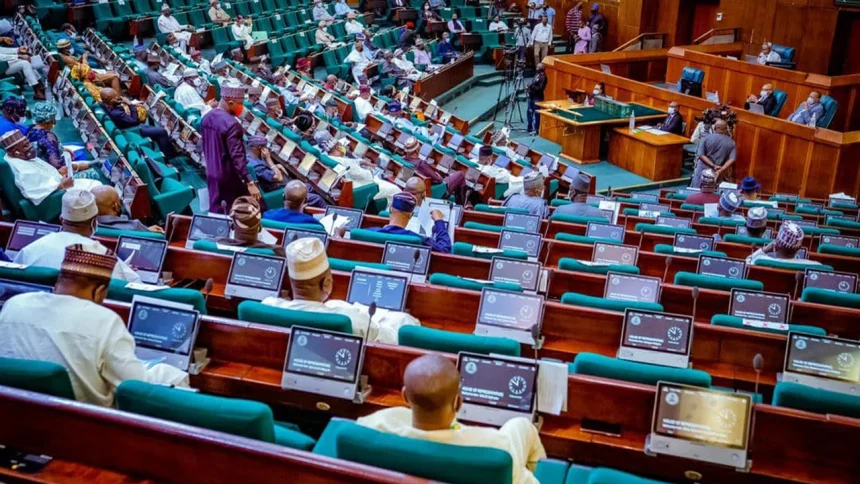
WASHINGTON D.C. & ABUJA — Lawmakers in both the United States Congress and Nigeria’s House of Representatives on Tuesday held separate sessions to address the worsening wave of insecurity, mass kidnappings, and alleged persecution of Christians in Nigeria.
In Washington D.C., key committees of the U.S. Congress convened a high-level joint briefing following a directive issued on October 31 by President Donald Trump, instructing the House Appropriations Committee to investigate what he described as “the slaughter of Christians in Nigeria” and report findings directly to the White House.
The closed-door briefing, chaired by House Appropriations Vice Chair and National Security Subcommittee Chairman Mario Díaz-Balart, brought together members of the House Appropriations and Foreign Affairs Committees alongside leading religious-freedom experts.
US Congress Raises Alarm: “A Crisis That Can’t Be Ignored”
In remarks that set the tone for the session, Díaz-Balart described global religious freedom as “both a moral obligation and an essential American interest,” stressing that no individual should fear violence because of their religious belief. He noted that his FY26 funding bill includes provisions aimed at strengthening U.S. interventions in global religious-freedom violations.
Representative Robert Aderholt called the situation in Nigeria “a crisis that can’t be ignored,” declaring strong support for Christian communities and other persecuted groups. Congressman Riley Moore linked the briefing to Nigeria’s recent redesignation as a Country of Particular Concern, warning that the world “will no longer turn a blind eye” to the killings and abductions.
Foreign Affairs Committee Chairman Brian Mast framed the violence as “a targeted campaign of religious cleansing,” asserting that extremist groups are attempting to displace Christians from ancestral territories in the Middle Belt.
Similarly, House Foreign Affairs Africa Subcommittee Chairman Chris Smith described Nigeria as “ground zero of religious violence,” accusing authorities of allowing attackers to operate with “complete impunity.”
Expert Accounts Expose Worsening Violence
Expert testimonies painted a bleak picture.
USCIRF Chair Vicky Hartzler cited the recent abduction of more than 300 children and 12 teachers from a Catholic school in November as evidence that religious freedom in Nigeria is “under siege.”
Sean Nelson of Alliance Defending Freedom International recounted harrowing cases involving kidnappings, forced conversions, false blasphemy charges, and mass killings. He described visiting villages devastated by attacks allegedly carried out by Fulani militants, noting “the aftermath of pastors beheaded, mass graves, widows and orphans.”
Dr. Ebenezer Obadare of the Council on Foreign Relations identified Boko Haram as the “central driver” of religiously motivated violence, urging the U.S. to maintain pressure on the Nigerian government. He recommended two key policy goals: continuing military cooperation to neutralise jihadist groups, and pushing for the removal of Sharia law in Northern states.
Committee officials confirmed that a comprehensive report with recommendations will be submitted to President Trump in the coming weeks.
US–Nigeria Security Collaboration Intensifies
The briefing comes on the heels of strengthened security cooperation between both countries. President Bola Tinubu recently approved Nigeria’s delegation to a new U.S.–Nigeria Joint Working Group aimed at enhancing intelligence sharing, counterterrorism operations, border security, and humanitarian coordination.
The initiative follows rising concerns over terrorist attacks and targeted violence against vulnerable communities across Nigeria.
On November 20, the U.S. House Subcommittee on Africa also convened a public hearing to review Nigeria’s redesignation as a Country of Particular Concern—a step that could pave the way for sanctions on Nigerian officials implicated in religious-freedom violations.


