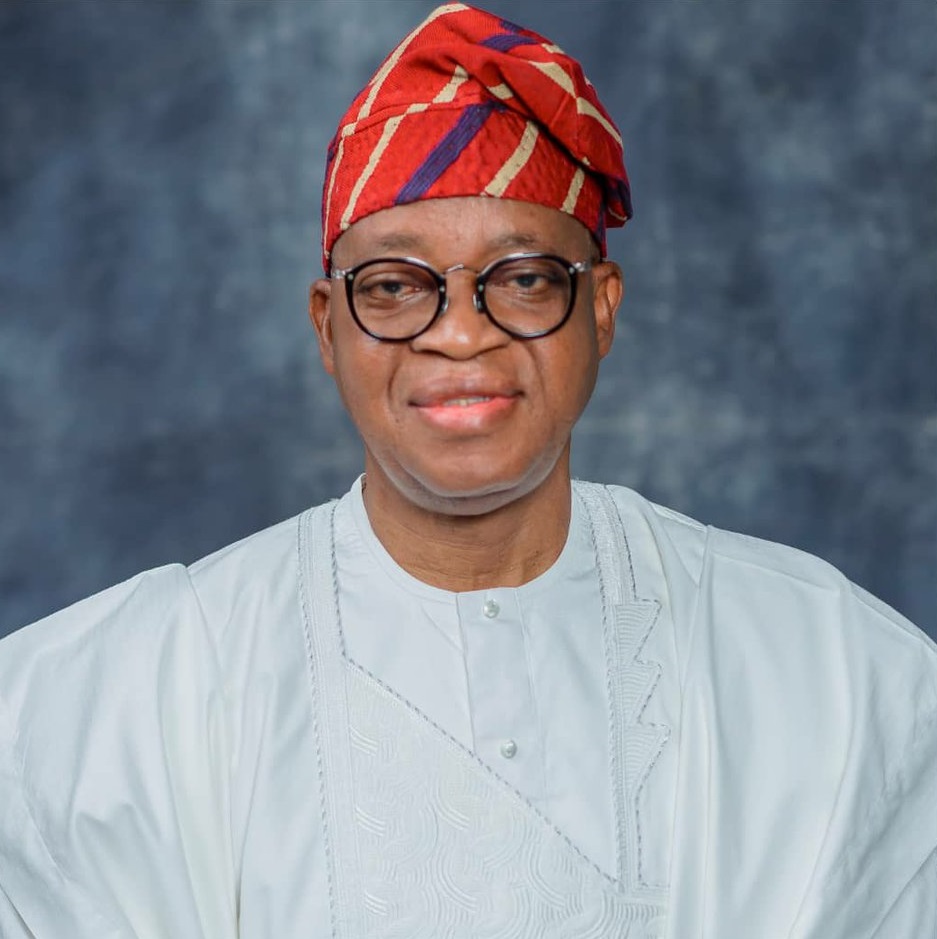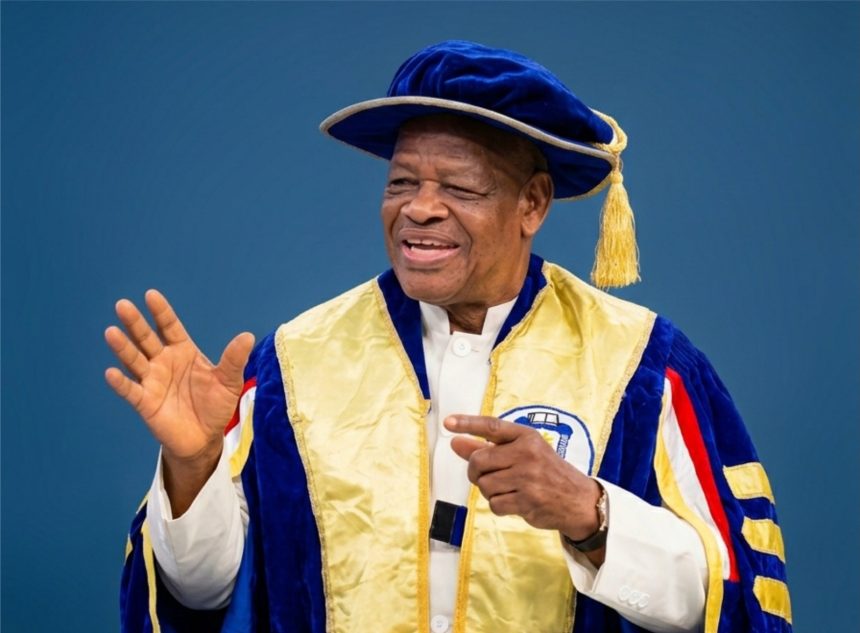
The Vice-Chancellor of Tansian University, Prof. Eugene Okoye Nwadialor, has recounted what he described as a humiliating ordeal in which he returned from a four-week medical trip to the United States only to be locked out of the university he had served as its chief academic officer. Speaking to journalists in Abuja after a meeting with officials of the National Universities Commission (NUC), Nwadialor narrated how administrative changes began less than a week after his departure, followed about a week later by his learning that the Deputy Vice-Chancellor, Academic, Prof. Cater Dike Nnamdi Umeh, had been appointed Acting Vice-Chancellor.
Speaking after his engagement with the NUC, he said he had brought the matter before the commission because, in his view, it extends beyond his personal position and raises fundamental questions about due process, institutional governance and the integrity of Nigeria’s university system.
His full statement reads:
Distinguished members of the press, ladies and gentlemen,
I have invited you here because the circumstances surrounding my position as Vice-Chancellor of Tansian University have reached a point where silence could be misconstrued as acquiescence. What unfolded while I was away for medical treatment bears, in my view, the disturbing features of a palace coup within the ivory tower—a sudden alteration of authority carried out while the substantive occupant of an office was outside the institution and, upon his return, confronted with a closed gate.
I am Professor Eugene Okoye Nwadialor, Vice-Chancellor of Tansian University, Umunya. I have served this institution since my appointment on May 6, 2019, dedicating my professional experience, intellectual energy and administrative capacity to its development. My journey to the United States was neither a resignation nor an abandonment of duty. I travelled for medical treatment after formally handing over the administration of the university to the Deputy Vice-Chancellor, Academic, Professor Cater Dike Nnamdi Umeh. I was away for approximately four weeks and expected to return to Nigeria and resume my responsibilities.
What followed was a sequence of events that I regard as profoundly disturbing and, if established in the manner I have described, an aberration in the governance of an institution that should be guided by scholarship, statutes, due process and intellectual discipline rather than abrupt shifts of power.
The first signs of the palace coup
Less than one week after I travelled to the United States, I learnt that administrative changes had begun taking place within the university under Professor Umeh. At that stage, I was still receiving medical treatment and had no reason to believe that my position as Vice-Chancellor had been brought to an end.
About a week later, I received information that Professor Umeh had been appointed Acting Vice-Chancellor.
The speed of these developments was striking. I had travelled for medical treatment after formally handing over to Professor Umeh as Deputy Vice-Chancellor. I had neither resigned nor received any communication informing me that my appointment had been terminated, suspended or otherwise brought to an end. Yet, while I was outside the country, the administrative architecture of the university appeared to be changing around the office I occupied.
That is why I describe what happened, from my perspective, as bearing the character of a palace coup. I use that expression deliberately—not to sensationalise the matter, but to describe the extraordinary sequence in which the substantive Vice-Chancellor left temporarily for medical treatment, administrative changes followed within days, an Acting Vice-Chancellor emerged shortly afterwards, and the substantive officeholder returned to find his access to the institution denied.
I was still in the United States receiving medical attention when these developments unfolded. I was not consulted about the appointment, nor was I formally informed that a decision had been taken to alter the status of my office.
Before travelling, I followed the administrative procedure of handing over. My expectation was straightforward: receive treatment, recover and return to continue my duties.
I did not leave the university as a man abandoning his post. I left as its Vice-Chancellor temporarily attending to a medical matter.
That distinction is important because the events that followed created the impression that my absence had somehow become an opportunity to reconfigure the leadership of the institution.
An ivory tower is supposed to be governed by reason, procedure and institutional memory. It should not become a theatre in which authority changes hands behind closed doors while the substantive officeholder is away.
The chronology of my appointment
Because the dates surrounding my tenure have become central to the dispute, I will state them plainly.
My first appointment as Vice-Chancellor of Tansian University was made on May 6, 2019. That tenure subsequently ran its course and, according to the governing arrangements under which I served, my first tenure was due to end on May 30, 2024. Before that date, my tenure was extended for two years, taking it to September 30, 2026.
Subsequently, the Governing Council renewed my appointment for another five-year tenure. On the basis of that renewal, my second tenure is extend beyond September 2026 and to expire on May 30, 2030.
When I travelled to the United States, I did not understand myself to be a Vice-Chancellor whose appointment had expired or was about to expire. I travelled in the belief that I remained the substantive Vice-Chancellor of Tansian University.
If the competent authority had subsequently taken a decision terminating or otherwise altering my appointment, I believe that decision should have been formally communicated to me and handled in accordance with the university’s governing framework.
I returned to Nigeria on September 22 with the intention of resuming my duties as Vice-Chancellor.
Instead, when I arrived at the university to resume work, I was refused entry into the institution. I was informed, that the instruction preventing me from entering the university had been given on the directive of the Chancellor, Very Rev. Fr. Dr. Edwin S. C. Obiorah, and Professor Cater Dike Nnamdi Umeh.
The scene was difficult to comprehend. I had travelled abroad for medical treatment, remained away for approximately four weeks and returned prepared to continue my work. Instead of walking back into my university, I encountered a barrier between myself and the institution I had served.
I had not resigned. I had not received a termination letter. I had not been formally notified that my appointment had been brought to an end.
When I sought clarification from Fr. Obiorah, I was told that my appointment had expired and that I should write for my severance allowance. That response was difficult for me to reconcile with the documents relating to the renewal of my appointment, which I understood to have extended my tenure beyond September 2026.
The symbolism of that moment was difficult to ignore: a Vice-Chancellor who had left the country temporarily for medical treatment returned to the university he had administered and was unable to pass through its gates.
Universities are supposed to be sanctuaries of reason, scholarship and orderly disagreement. They are places where evidence should prevail over conjecture, procedure over impulse and institutional rules over personal influence.
That is why I regard the events surrounding my return as an aberration in the ivory tower.
The issue is not simply whether Professor Umeh could act in my absence. The deeper question is whether the process by which the change occurred respected the governing instruments of the university and whether the substantive Vice-Chancellor was properly informed of a decision affecting his office.
A university cannot be governed effectively through ambiguity. Students, lecturers, researchers, administrative staff and the wider academic community require certainty about who possesses authority and on what legal or institutional basis that authority is exercised.
Where authority changes hands, the process should be visible in the records.
If my tenure had expired, where is the formal communication notifying me?
If my appointment had been terminated, where is the termination letter?
If the Governing Council had taken a decision altering my status, where is the resolution communicating that decision?
If there had been a lawful change in my appointment, why was I not formally informed before returning to the university?
These are not questions that should be settled by rumour or competing narratives. They are questions capable of being answered by documents.
I am not asking the media to determine the legal validity of any document. I am asking that the relevant records be examined by the competent authorities and that the facts be established without ambiguity.
I have formally written to the National Universities Commission and the Committee of Vice-Chancellors of Nigerian Universities.
If there is a lawful basis for what happened, it should be capable of being demonstrated through the appropriate documents and procedures.
I have nothing to hide.
Tansian University should not become a battleground where competing interests determine the direction of an academic institution. Its governance should be anchored in statutes, regulations, due process and the collective authority of its properly constituted organs.
An ivory tower cannot operate properly when uncertainty hangs over its leadership like a cloud. The university community deserves to know who is authorised to issue directives, appoint principal officers, alter administrative structures and speak on behalf of the institution.
Let the university survive the politics of personalities
I have spent years building my career in academia and administration. I understand that offices are temporary and that no individual should consider himself greater than the institution he serves.
That principle is why I am speaking.
I am not asking anyone to place Professor Nwadialor above Tansian University. I am asking that Tansian University be placed above individual interests.
I am asking that its governing instruments be respected, that institutional authority be exercised through recognised procedures and that decisions affecting the leadership of the university be subjected to due process.
And above all, let the institution prevail over individual interests.
Thank you.