How a brief rendition of Nigeria’s former national anthem became a political controversy, raising fresh questions about social media manipulation, responsible journalism and the dangers of misinformation ahead of the 2027 general elections.
In today’s fast-paced digital information environment, a few seconds of video footage can trigger a nationwide controversy, shape public opinion and potentially damage political reputations before the complete facts surrounding an incident emerge.
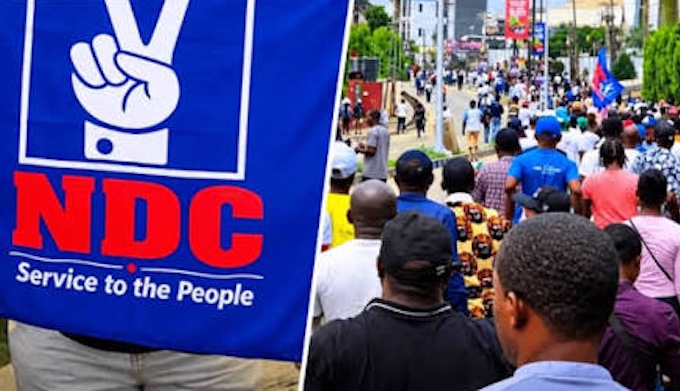
This was the situation following the Nigeria Democratic Congress (NDC) town hall rally in Ikeja, Lagos, attended by the party’s presidential candidate, Peter Obi, and its Lagos governorship candidate, Funso Doherty.
What should ordinarily have been a political engagement became the subject of an intense social media controversy after short video clips showing some attendees singing Nigeria’s former national anthem, Arise, O Compatriots, went viral.
The footage quickly attracted criticism from political opponents and social media commentators, some of whom interpreted the rendition as a deliberate rejection of Nigeria’s current national anthem, Nigeria, We Hail Thee, which replaced the former anthem in May 2024.
The controversy soon assumed a political dimension, with allegations that the party’s leadership and supporters had deliberately disregarded a national symbol.
But beneath the viral headlines and heated exchanges was a more complicated account of what reportedly transpired at the rally.
BEYOND THE VIRAL FOOTAGE
According to explanations subsequently provided by the NDC National Campaign Council and party representatives, the viral clips did not capture the complete sequence of events at the gathering.
The party maintained that Nigeria’s current national anthem was duly rendered at the rally, contrary to the impression created by the circulating footage.
It explained that the brief rendition of the former anthem was a spontaneous reaction from some participants in an emotionally charged atmosphere, reportedly following an attempt by suspected political thugs to disrupt the gathering.
Among those who offered explanations were Funso Doherty and Joseph Orukpe, the party’s candidate for Ikeja Federal Constituency.
According to the party’s account, the rendition of the former anthem did not amount to a rejection of the country’s officially recognised national anthem, as the gathering subsequently proceeded to sing the current anthem.
This explanation raises an important question: how much of what Nigerians consume on social media represents the complete truth, and how much is a carefully selected fragment presented to advance a particular narrative?
THE POLITICS OF SELECTIVE EDITING
The NDC Lagos rally controversy illustrates a growing challenge confronting political communication in Nigeria: the deliberate or careless manipulation of public perception through selective video editing.
Unlike fabricated stories, selective editing often relies on genuine footage. The images are real, the people are identifiable, and the events actually happened. The deception lies in what is omitted.
A video may capture an incident accurately while presenting an entirely misleading impression of the circumstances surrounding it.
In this instance, the circulation of footage showing the rendition of the former national anthem, without adequately establishing what happened before and afterward, created an impression that the NDC had deliberately rejected the current anthem.
Such practices are particularly dangerous in a politically polarised environment where citizens are often more inclined to believe information that confirms their existing political preferences.
The problem is further compounded by social media algorithms that reward sensationalism, controversy and emotional reactions. Consequently, a misleading ten-second clip can attract significantly more attention than a detailed explanation containing the complete sequence of events.
WHEN POLITICAL PROPAGANDA OVERSHADOWS PUBLIC INTEREST
There is little doubt that political parties and their supporters will continue to scrutinise the actions and statements of their opponents. Such scrutiny is a legitimate component of democratic competition.
However, criticism must be founded on verifiable facts rather than incomplete information.
When political actors amplify misleading interpretations of events for partisan advantage, the consequences extend beyond the individuals or organisations directly involved.
Public attention is diverted from substantive national issues, including insecurity, unemployment, economic hardship, infrastructure, education and governance.
Instead of interrogating political candidates on their policy proposals and capacity to address national challenges, public discourse becomes dominated by controversies that may have been exaggerated or misrepresented.
The NDC rally controversy therefore presents an important lesson for political organisations, media practitioners and citizens: the responsibility to establish facts must take precedence over the temptation to exploit controversy.
THE RESPONSIBILITY OF THE MEDIA
For professional journalists, the incident reinforces the importance of verification, context and balanced reporting.
The publication of viral footage should not automatically translate into the acceptance of the interpretation attached to it. Journalists must establish the origin of a video, examine its completeness, seek independent accounts and obtain responses from relevant parties before drawing conclusions.
Equally important is the responsibility to distinguish between allegations, eyewitness accounts, official explanations and independently established facts.
A media organisation that publishes an incomplete video without adequate verification risks becoming an instrument of misinformation, whether deliberately or otherwise.
The credibility of journalism rests not on how quickly a story is published but on how accurately it reflects what actually happened.
A WARNING AHEAD OF 2027
With Nigeria gradually approaching another election cycle, the NDC Lagos rally controversy offers an early warning about the potential influence of digital misinformation on the country’s democratic process.
Political communication is increasingly driven by short videos, viral posts, anonymous accounts and competing narratives. Artificial intelligence and sophisticated editing technologies are also making it easier to manipulate audiovisual content and create misleading impressions.
For voters, the implication is clear: not everything that trends on social media deserves to be believed.
Citizens must cultivate the habit of seeking complete recordings, checking multiple credible sources and examining the context surrounding controversial incidents before accepting or sharing information.
Political parties, on their part, must resist the temptation to exploit misleading narratives, while media organisations must remain committed to professional standards regardless of political affiliations.
THE TRUTH MUST BE BIGGER THAN THE CLIP
Ultimately, the controversy surrounding the NDC Lagos rally is about more than which version of Nigeria’s national anthem was sung at a political gathering. It highlights the growing danger of allowing selective information to shape national conversations.
If the explanations offered by the NDC and its representatives are supported by the complete recordings of the event, then the viral interpretation deserves serious reconsideration.
Democracy thrives on informed citizens, credible journalism and the freedom to question political leaders. It cannot flourish in an environment where carefully selected fragments are routinely presented as the entire truth.
As Nigeria moves towards the 2027 general elections, one principle must guide every responsible citizen: verify before you vilify, investigate before you accuse, and always seek the full story before accepting the viral version.
Because sometimes, the biggest fake news is not what a video shows, but what those circulating it deliberately leave out.