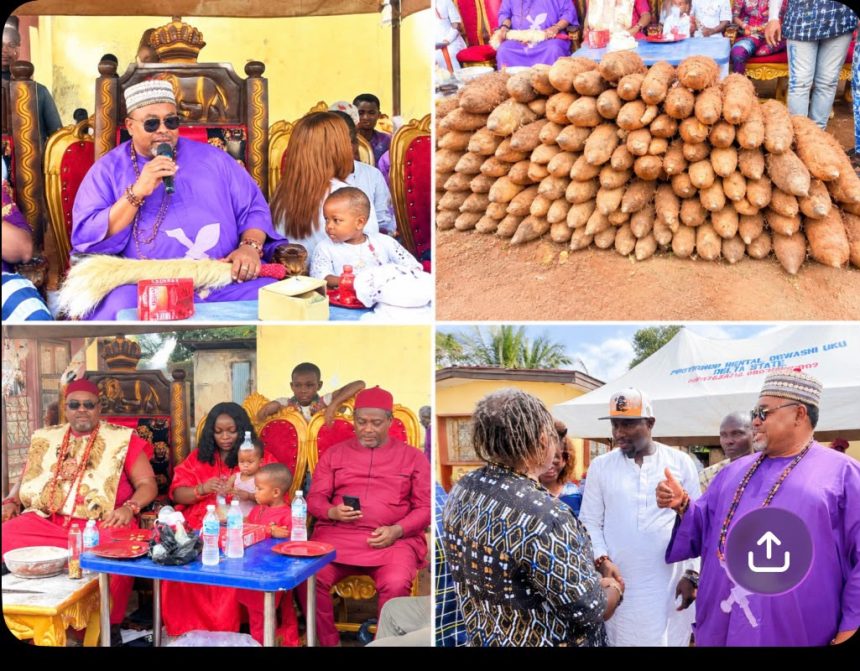
Traditional ceremony promotes cultural heritage, agricultural abundance, peace and unity in Ogwashi-Uku Kingdom
OGWASHI-UKU, DELTA STATE — It was a celebration of culture, ancestral heritage and agricultural abundance as High Chief Gabriel Anyibofu Ohai, the revered Odogwu of Ogwashi-Uku Kingdom in Aniocha South Local Government Area of Delta State, celebrated the 2026 New Yam Festival with the traditional observance of the Ihuji and Igbu Agbor ceremonies.
The colourful two-day event, held at his ancestral compound in Ogbe-Odogwu, Azungwu Quarters, Ogwashi-Uku, attracted traditional chiefs, cultural enthusiasts, women and youth groups, prominent personalities, friends and well-wishers from within and outside the kingdom.
The celebration underscored the enduring importance of the New Yam Festival, popularly known as Iwaji, in preserving the cultural identity, ancestral heritage and communal values of the Ogwashi-Uku people.
A major highlight of the festival was the sacred procession of the Odogwu to Ihu-Akpu, the ancestral sacred ground at Ogbe-Odogwu, where he offered prayers and thanksgiving for a successful farming season, in accordance with the age-long customs and traditions of the kingdom.
The traditional rites symbolised gratitude for the blessings of the harvest, reverence for ancestral heritage and prayers for continued peace, prosperity and agricultural abundance.
IWAJI: A SYMBOL OF GRATITUDE, UNITY AND PROSPERITY
Speaking with newsmen during the celebration, High Chief Ohai described the New Yam Festival as one of the most significant cultural institutions of the Ogwashi-Uku people, noting that its importance extends beyond festivities and entertainment.
According to him, Iwaji represents thanksgiving to God Almighty for a fruitful farming season, appreciation of the land’s agricultural resources and the preservation of customs passed down through generations.
He explained that the festival provides an opportunity for families and communities to come together, strengthen relationships, promote mutual understanding and renew their commitment to the collective progress of the kingdom.
The Odogwu observed that the celebration had continued to foster love, unity, togetherness and development among the people, while encouraging younger generations to appreciate and preserve their cultural heritage.
He called on the sons and daughters of Ogwashi-Uku to sustain the traditions that unite them and to promote peaceful coexistence among the various quarters and villages that constitute the kingdom.
CALL FOR PEACE AND SUPPORT FOR THE OBI
High Chief Ohai also used the occasion to call for greater unity and cooperation among the people, urging all indigenes to rally behind the traditional ruler of Ogwashi-Uku, His Royal Majesty, Obi Ifechukwude Aninshi Okonjo II.
He stressed that peace, respect for traditional institutions and collective responsibility were essential to the kingdom’s sustainable development.
The Odogwu maintained that the cultural significance of Iwaji should inspire the people to set aside differences, strengthen communal bonds and work together towards a more prosperous future for Ogwashi-Uku.
His message reinforced the view that traditional festivals can serve as important platforms for promoting reconciliation, social cohesion and community development.
CULTURAL DISPLAY AND TRIBUTES TO THE ODOGWU
The festival featured rich cultural displays, traditional music, dancing and the presentation of new yams, reflecting the agricultural heritage and cultural vitality of Ogwashi-Uku Kingdom.
Dignitaries, prominent personalities and other well-wishers who attended the event commended High Chief Ohai for his commitment to preserving the kingdom’s customs and traditions.
They described him as a respected custodian of culture and a symbol of bravery, discipline and traditional leadership whose conduct reflects the responsibilities associated with his revered title as Odogwu.
The encomiums also highlighted the importance of individuals who invest their time and resources in sustaining indigenous institutions and ensuring that traditional practices remain relevant to contemporary society.
WHY THE NEW YAM FESTIVAL MATTERS TO OGWASHI-UKU
Beyond its colourful ceremonies, the 2026 New Yam Festival reaffirmed the place of culture in the social and communal life of Ogwashi-Uku Kingdom.
The festival celebrates agriculture as a source of livelihood, recognises the efforts of farmers, expresses gratitude for the harvest and encourages appreciation of the land’s productive capacity. It also provides an opportunity for the transmission of cultural knowledge, traditional values and ancestral practices from one generation to another.
Equally significant is its potential to strengthen relationships among families, quarters and villages, bringing together people who may otherwise be separated by distance or differences. Such gatherings help reinforce a shared identity and a collective sense of belonging.
For Ogwashi-Uku, therefore, the New Yam Festival is not merely an annual cultural event; it is an expression of heritage, gratitude, unity and hope for continued prosperity. Its observance also offers traditional leaders and community stakeholders an opportunity to encourage peace, responsible leadership and cooperation in pursuit of the kingdom’s development.
The two-day celebration ended with prayers for long life, good health and greater prosperity for High Chief Gabriel Anyibofu Ohai, the Odogwu of Ogwashi-Uku Kingdom, as well as lasting peace, unity and progress for the entire kingdom.