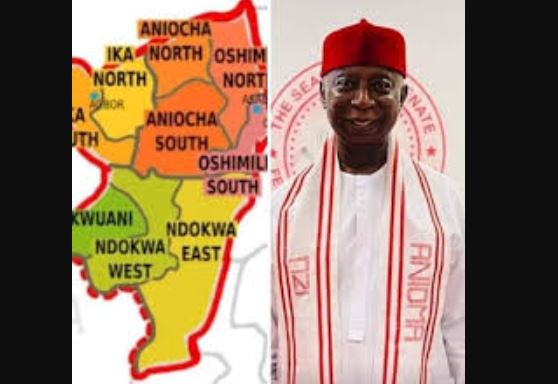
As Ned Nwoko’s clamour gains traction, the nation weighs the promise and pitfalls of another Nigerian state
By: Fresh Facts Magazine Editorial Team
As the drumbeats for state creation grow louder in Nigeria’s ever-contentious federation, the name Anioma rings with renewed fervour, thanks to the relentless advocacy of Senator Ned Nwoko. With the National Assembly’s zonal public hearing on constitutional amendment scheduled for Uyo, Akwa Ibom State, the conversation around Anioma State is no longer a footnote—it is a headline issue.
For the people of Delta North Senatorial District, the prospect of Anioma State is a beacon of political recognition and socio-economic opportunity. But like every political proposition in Nigeria, the call is not without controversy. This report takes a critical look at the potential benefits and inherent drawbacks of carving out Anioma State from present-day Delta State.
THE ANIOMA VISION: A BRIEF CONTEXT
Anioma, meaning “good land” in Igbo, is home to the Igbo-speaking communities of Delta North: including towns such as Asaba, Ogwashi-Uku, Ibusa, Obiaruku, Issele-Uku, and Igbodo. These communities, though culturally aligned with the Igbo ethnic group, have long existed in political limbo—neither fully integrated with their Igbo kinsmen in the Southeast nor dominant in the multi-ethnic politics of Delta State.
Senator Ned Nwoko, representing Delta North, argues that the creation of Anioma State will correct a historical imbalance, giving the people of Delta North their own administrative and developmental identity, while also achieving geopolitical parity in Nigeria’s regional structure.
THE PROS: Why Anioma State May Make Sense
1. Geopolitical Balancing
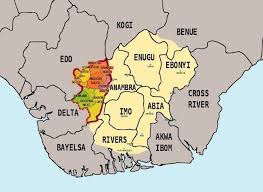
Nigeria’s six geopolitical zones do not have an equal number of states. The Southeast zone remains the most disadvantaged, with only five states, compared to the seven in the Northwest. Anioma, if created and added to the Southeast, would help bridge this disparity and fulfil the cries of marginalization in the zone.
2. Political Autonomy and Representation
Within Delta State, the Anioma people are often politically overshadowed by the more populous and oil-rich Urhobo, Itsekiri, and Ijaw ethnic groups in Delta Central and South. A separate state would grant the Anioma people full control over their governance, leadership, and development priorities.
3. Cultural Affirmation and Identity
The Anioma region is culturally Igbo, but its political exclusion from Igbo mainstream affairs in the Southeast has left it somewhat orphaned. A new state would solidify its cultural identity and potentially reunite it with its ethnic kinsmen in the Southeast, creating a stronger socio-political bond.
4. Administrative Efficiency and Development
With Asaba currently serving as the capital of Delta State, the Anioma region is often seen more as an administrative seat than a development priority. A new state could attract focused infrastructural development, job creation, and resource allocation directly to the region.
5. Constitutional Backing and Popular Support
Unlike many state creation agitations driven by elite interests, Anioma’s demand enjoys broad-based support across traditional rulers, town unions, youth groups, and politicians. The movement also aligns with constitutional provisions that allow for new states, provided they meet procedural thresholds.
THE CONS: The Cost and Complexities of Creation
1. Economic Viability Concerns
Critics question whether Anioma can survive economically as a standalone state. While the region has agricultural potential and urban centres like Asaba and Ogwashi-Uku, it lacks the crude oil reserves that sustain states like Delta, Rivers, or Akwa Ibom. Sustaining governance infrastructure could be a heavy burden on federal allocation.
2. Inter-Ethnic Tensions in Delta State
The move could deepen existing political tensions between Delta North (Anioma) and other ethnic blocs in the state. Communities in Delta Central and South may see the agitation as a betrayal or an attempt to weaken the influence of Delta State as currently constituted.
3. Precedent and the Pandora’s Box Argument
With over 50 state creation proposals pending before the National Assembly, critics argue that granting Anioma State could open the floodgates. Other agitations—like Oke-Ogun (Oyo), Tiga (Kano), Etiti (Southeast), and Gurara (Kaduna)—may intensify, leading to unmanageable fragmentation of the federation.
4. Political Power Games
Skeptics also accuse some politicians of using the Anioma agitation for personal political mileage. Some say Senator Ned Nwoko’s advocacy may be partly driven by ambitions to become a founding governor or kingmaker in a new state—a claim his camp denies.
5. Fiscal Implications for the Nation
With Nigeria already grappling with a bloated public sector and high governance costs, the addition of another state—along with its bureaucracy, legislature, and security apparatus—could further strain national finances.
VOICES FROM THE STREET
“For decades, we have voted in elections and paid taxes, but have little to show in infrastructure. Anioma State is long overdue,” says Chief Okey Ugochukwu, a community leader from Ogwashi-Uku.
But not everyone agrees.
“This is not the time to add more states. Let us fix what we have first,” counters Dr. Mariere Ofoni, a political scientist based in Warri.
THE ROAD AHEAD
The scheduled public hearing in Uyo offers another opportunity for Anioma proponents to make their case. Yet, for this clamour to materialize into constitutional reality, the proposal must clear daunting legal and political hurdles—two-thirds support from federal and state legislatures, among others.
Whether Anioma becomes Nigeria’s 37th state or not, the debate speaks to a deeper issue: the unresolved contradictions in Nigeria’s federal arrangement and the persistent search for equitable representation.
FINAL THOUGHT
Senator Ned Nwoko may have reawakened the Anioma dream, but its realization depends not just on passion and politics—but on pragmatic answers to one enduring question: Can Nigeria truly afford another state—politically, economically, and structurally?